
In the industrial flow measurement sector, vortex flow meters are versatile and reliable tools, widely used to measure the flow of gases, liquids, and steam. Boasting a simple structure, high accuracy, and low maintenance requirements, they have become essential across industries—from petrochemicals to municipal heating. This article covers their working principle, key advantages, practical applications, and selection tips, helping you gain a clear understanding and make the right choice for your operational needs.
1. What is a Vortex Flow Meter?
A vortex flow meter is a common flow measurement device based on the Kármán Vortex Street principle. Unlike traditional mechanical flow meters that rely on rotating components like impellers, it measures flow by detecting the vortices formed when fluid passes through a special obstacle (known as a vortex generator) inside the pipeline. This non-contact measurement method barely disturbs fluid flow and maintains consistent stability over time.
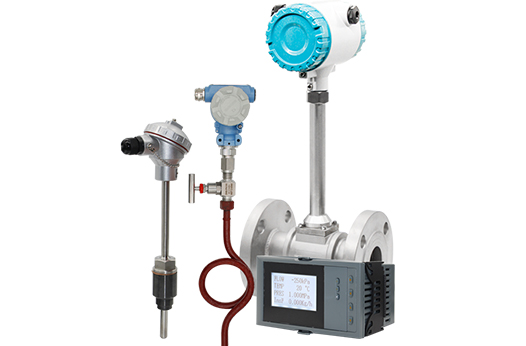
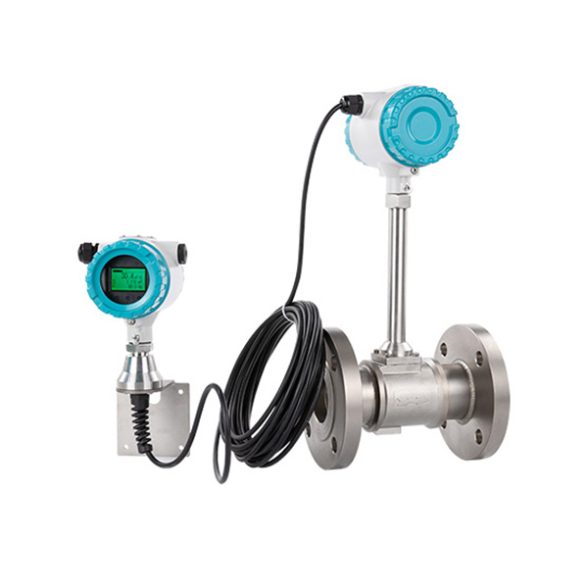
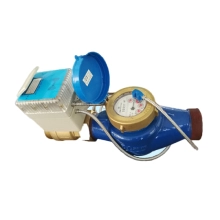
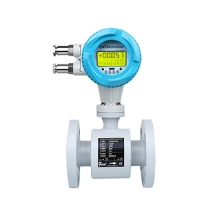
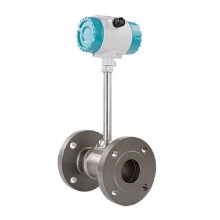
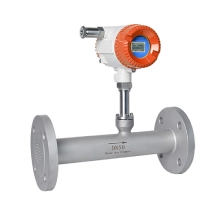
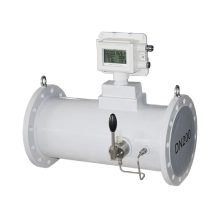
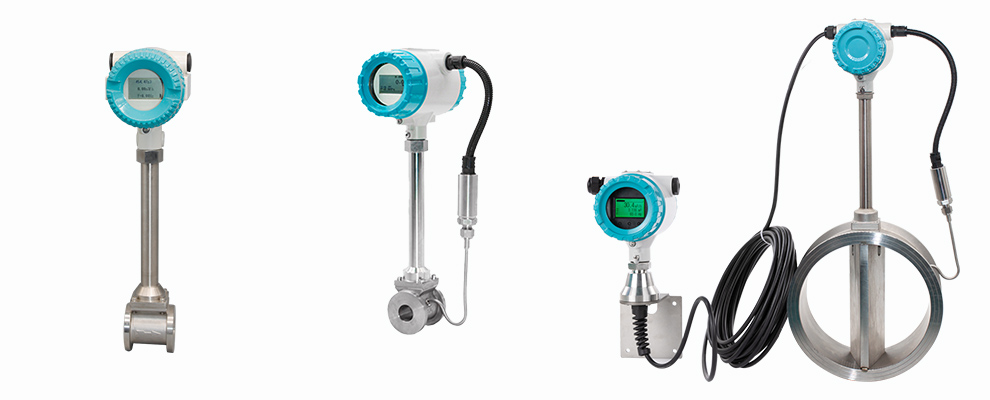
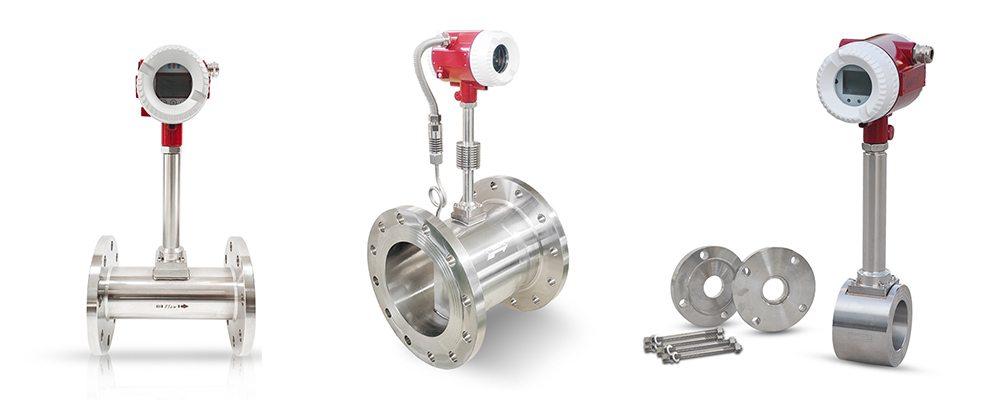
The main components of a vortex flow meter include a vortex generator (typically triangular, trapezoidal, or cylindrical), a sensor, and an electronic converter. The sensor detects changes caused by the vortices, converts them into electrical signals, and the converter then processes these signals to output accurate flow data—such as real-time flow and total flow.
2. Working Principle of Vortex Flow Meters
A simple analogy helps explain how it works: when wind blows past a street lamp pole, regular vortices form on both sides—that’s the Kármán Vortex Street phenomenon, and it applies equally to fluid in pipelines.
As gas, liquid or steam flows past the pipeline’s vortex generator, vortices form alternately on its two sides. The number of vortices per unit time links directly to the fluid’s speed. Faster fluid flow produces more vortices, while slower flow creates fewer. The flow meter detects this frequency to calculate fluid speed. It then works out total flow based on the pipeline’s size.This design—without moving parts—ensures high measurement accuracy and reduces wear and breakdowns.
3. Core Advantages of Vortex Flow Meters
Compared to traditional flow meters (e.g., impeller or orifice meters), vortex flow meters offer distinct advantages, making them a top choice for many industrial applications:
- Wide Adaptability: They measure gases (natural gas, compressed air), liquids (water, oil, corrosive liquids), and steam, accommodating various pipeline sizes.
- High Accuracy & Stability: They are more accurate than traditional mechanical flow meters, with consistent long-term performance. No frequent calibration is required, ensuring reliable operation over an extended period.
- Simple Structure & Low Maintenance: The absence of internal moving parts results in low failure rates and a long service life (over 10 years), requiring only regular cleaning.
- Low Pressure Loss: They cause significantly less pressure loss than other flow meters (e.g., orifice meters), helping reduce energy consumption during fluid transportation and lower operational costs for businesses.
- Strong Environmental Adaptability: They can operate in high-temperature and high-pressure environments, and can be constructed with corrosion-resistant materials to handle harsh conditions involving corrosive media.
4. Practical Applications of Vortex Flow Meters
Thanks to these advantages, vortex flow meters are widely used across various industries for production monitoring, cost control, and safety assurance:
4.1 Petrochemical Industry
In the petrochemical industry, they monitor crude oil flow, boosting efficiency and reducing energy consumption. They also measure low-viscosity oils and corrosive liquids in production units.
4.2 Municipal Heating & Power Industry
In municipal heating systems, they monitor hot water flow to minimize waste; in thermal power plants, they measure steam to ensure safe boiler operation.
4.3 Food & Pharmaceutical Industry
In food processing, hygienic models ensure accurate batching and reduce waste; in the pharmaceutical industry, they measure clean fluids to maintain consistent product quality.
4.4 Other Industries
They are also used in the steel industry (monitoring furnace gas), water treatment (air flow in aeration tanks), and electronics (high-purity gas metering), as well as in energy management and environmental protection.
5. Selection Guide for Vortex Flow Meters
Choosing the right vortex flow meter is key to stable, accurate operation. Below are the key selection considerations:
5.1 Match Core Parameters
Clarify the medium (gas/liquid/steam) and operating conditions (temperature, pressure, viscosity). Select models with appropriate functions for gas or steam, and ensure the normal flow falls within the meter’s optimal range.
5.2 Consider Installation Environment
Reserve sufficient straight pipe sections to ensure uniform flow. Avoid areas with strong vibration (use shock-absorbing brackets if necessary) and select explosion-proof models for flammable environments.
5.3 Choose Appropriate Materials & Types
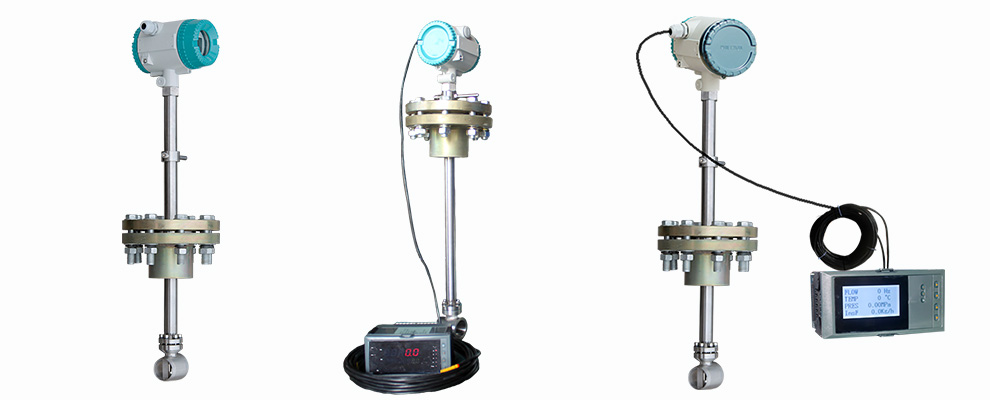
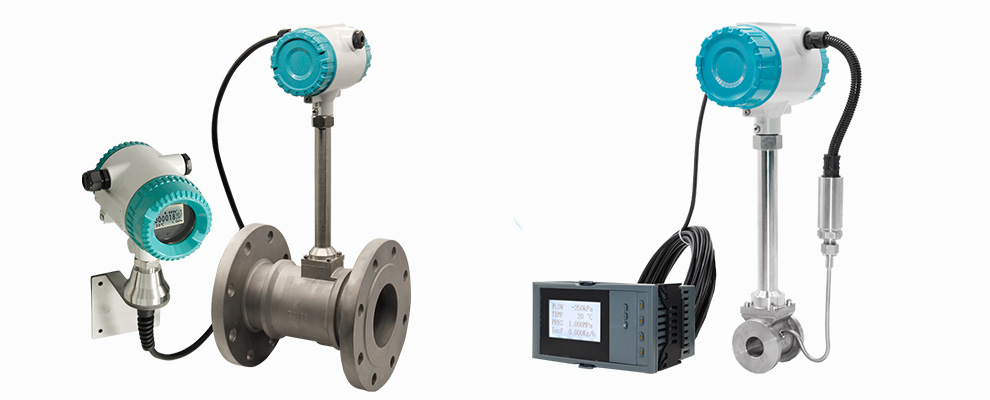
Use corrosion-resistant materials for corrosive media. Choose between integrated or split models based on temperature—split models are better suited for high-temperature environments.
6. Common Faults & Troubleshooting
Vortex flow meters may experience minor issues during use; here are common faults and their solutions:
- Unstable Flow Display: This may be caused by air bubbles in the medium, uneven flow, or insufficient straight pipe sections. Solutions: Remove air bubbles, adjust the installation position, or install a flow rectifier.
- No Output Signal: Check if the sensor is dirty or damaged, or if the connection between the sensor and converter is loose. Solutions: Clean the sensor, replace damaged components, or recheck the wiring.
- Large Measurement Error: This may stem from incorrect model selection, electromagnetic interference, or excessive vibration. Solutions: Select the correct model, use shielded cables, or install shock-absorbing devices.
Regular maintenance keeps your meter running stably. Clean the vortex generator and check for water buildup regularly. Calibrate the meter every 1–2 years.
7. Conclusion
Vortex flow meters are a core component of industrial automation, offering wide adaptability, high accuracy, and low maintenance. They provide reliable flow data across diverse scenarios, helping businesses streamline production processes, reduce energy consumption, and improve overall efficiency.
At WESDUN, we understand the critical role that reliable vortex flow meters play in global industrial operations—and that’s why we focus on delivering high-quality, cost-effective vortex flow meters to overseas customers. As the publisher of this article, we integrate all the core advantages outlined above into our products: wide adaptability to gases, liquids, and steam, high accuracy, a simple structure, and low maintenance. We design our meters to perfectly meet the measurement needs of overseas petrochemical, municipal heating, food and pharmaceutical industries. Our products comply with international standards and endure harsh operating conditions worldwide. They help overseas businesses streamline production, cut energy consumption and control costs. We also provide professional after-sales service and technical support to customers around the globe, ensuring your equipment operates smoothly and giving you peace of mind. Choose WESDUN as your trusted partner for industrial flow measurement.