
Introduction
Accurate flow measurement plays an important role in food processing. Food manufacturers need to control liquid ingredients, monitor water consumption, and maintain stable production. At the same time, they must meet strict hygiene requirements and prevent product contamination.
Standard flowmeters may not meet all these needs. Food processing plants often require sanitary electromagnetic flowmeters designed for hygienic applications.
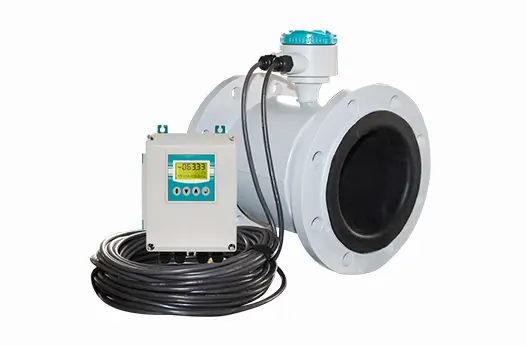
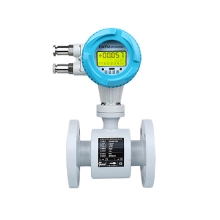
These flowmeters measure conductive liquids without moving parts in the measuring tube. They can help manufacturers improve measurement accuracy, maintain product quality, and reduce routine maintenance.
In this article, we explain why professional sanitary electromagnetic flowmeters are a practical choice for modern food processing plants.
1. Meet Strict Hygiene Requirements
Hygiene is a top priority in food production. Equipment that comes into contact with food products must support effective cleaning and minimize the risk of contamination.
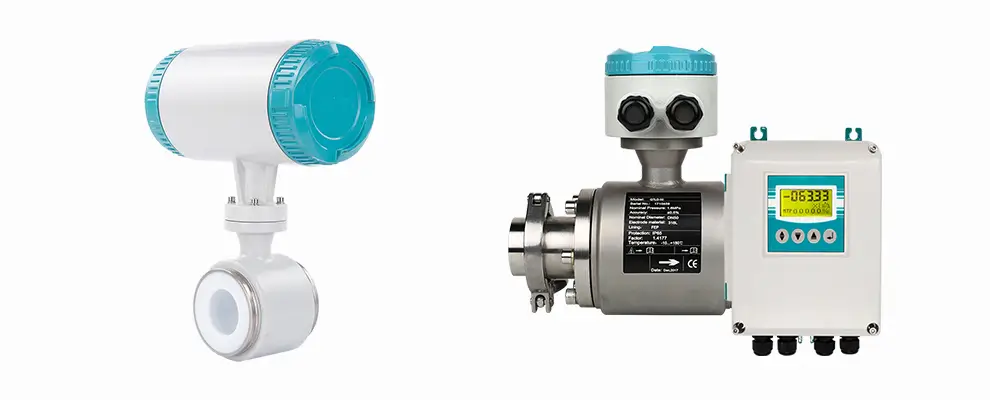
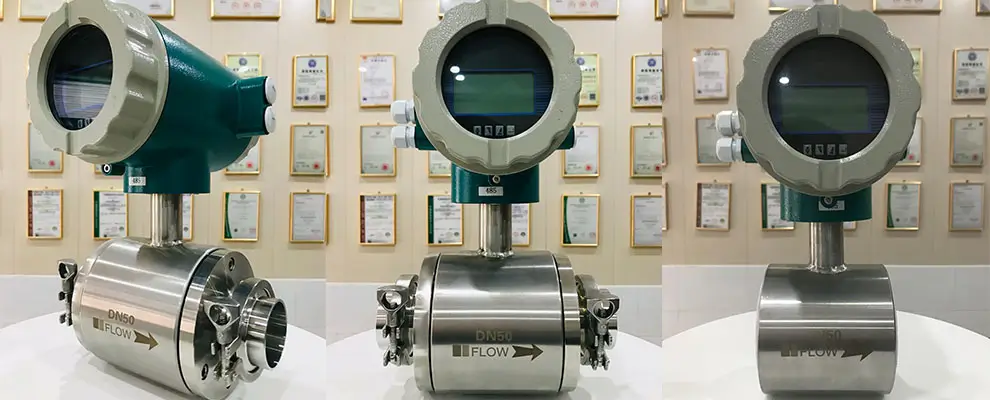
Professional sanitary electromagnetic flowmeters feature hygienic designs for food processing applications. Depending on the model, key features may include:
- Smooth surfaces that reduce areas where product residue can accumulate.
- Food-contact materials suitable for the intended application.
- Seals and liners selected to match the process liquid and cleaning conditions.
- Connections designed for hygienic piping systems.
- Compatibility with clean-in-place (CIP) systems, when properly specified.
These features help food manufacturers maintain clean production lines. However, hygienic performance also depends on the meter’s design, materials, installation, and cleaning procedures.
When selecting a flowmeter, buyers should verify that it meets the hygiene standards and certification requirements applicable to their industry and target market.
2. Provide Accurate and Stable Flow Measurement
Accurate flow measurement helps food manufacturers maintain consistent product quality and improve process control.
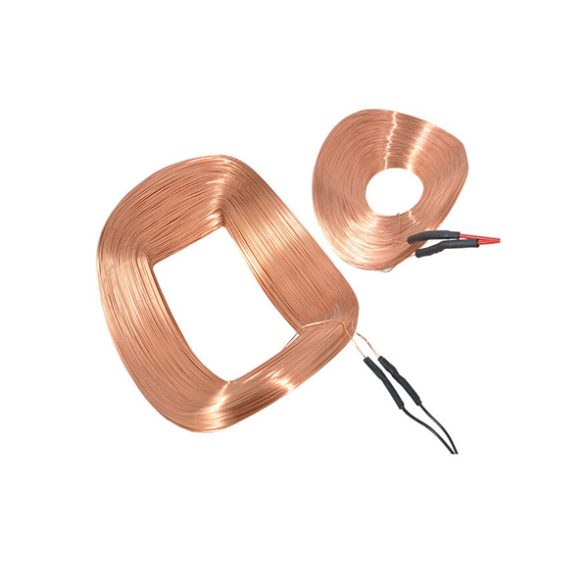
Electromagnetic flowmeters operate according to Faraday’s law of electromagnetic induction. When a conductive liquid flows through a magnetic field, it generates a voltage. The meter uses this voltage to calculate the liquid’s flow velocity and volumetric flow rate.
Because electromagnetic flowmeters have no moving parts in the measuring tube, they can provide stable readings with relatively low maintenance requirements.
Food processing plants can use sanitary electromagnetic flowmeters to measure conductive liquids such as:
- Milk and other dairy liquids.
- Fruit and vegetable juices.
- Liquid sugar solutions.
- Brine and salt solutions.
- Process water and cleaning liquids.
However, suitability depends on the liquid’s electrical conductivity and other process conditions. Electromagnetic flowmeters generally cannot measure liquids with insufficient electrical conductivity, including most oils and very low-conductivity liquids such as highly purified water.
With the right model and proper installation, manufacturers can monitor flow rates more consistently and improve control over their production processes.
3. Support Clean-in-Place (CIP) Operations
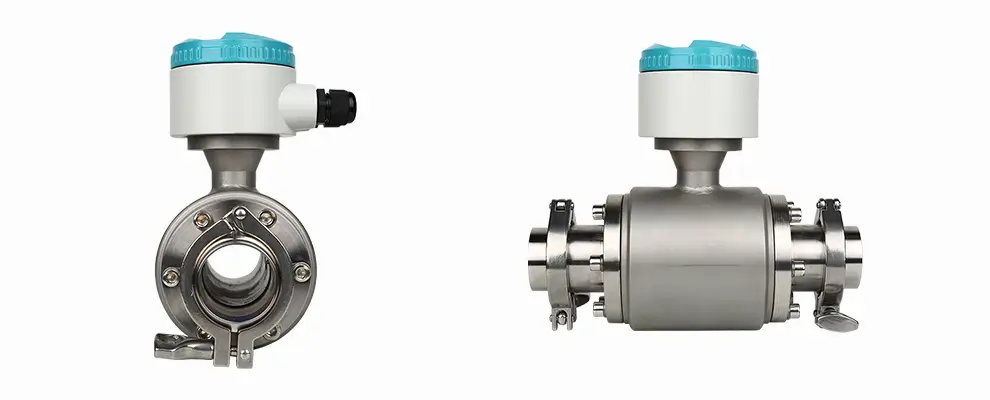
Many food processing plants use clean-in-place (CIP) systems to clean pipes, tanks, and equipment without dismantling the production line.
A sanitary electromagnetic flowmeter can help monitor the flow of cleaning solutions during CIP operations. Operators can use flow data to check whether the cleaning process meets the required operating conditions.
For example, a flowmeter can monitor cleaning liquid as it moves through a dairy processing line or a beverage production system.
To support CIP operations, the flowmeter must meet the cleaning system’s requirements. Buyers should confirm the maximum cleaning temperature, chemical compatibility, pressure rating, and hygienic design.
Some applications may also require a sensor that can withstand specific cleaning and sterilization procedures.
A properly selected flowmeter helps improve control over the cleaning process and supports consistent sanitation practices.
4. Reduce Maintenance and Production Downtime
Production interruptions can increase operating costs, while frequent maintenance can disrupt production schedules.
Sanitary electromagnetic flowmeters have no moving parts in the measuring tube. This design reduces mechanical wear and eliminates the need to maintain moving measurement components.
It can also help minimize pressure loss because the measuring tube does not contain the mechanical obstructions found in some other flowmeter designs.
However, the meter still requires proper inspection and maintenance. Electrode deposits, damaged liners, poor grounding, incorrect installation, and electrical interference can affect measurement performance.
To reduce downtime, food manufacturers should select a suitable flowmeter, follow the manufacturer’s installation instructions, and establish a regular inspection schedule.
5. Improve Process Control and Product Consistency
Food manufacturers often need to maintain consistent ingredient ratios and production conditions. Repeated measurement errors can affect the final product, especially in large-scale production.
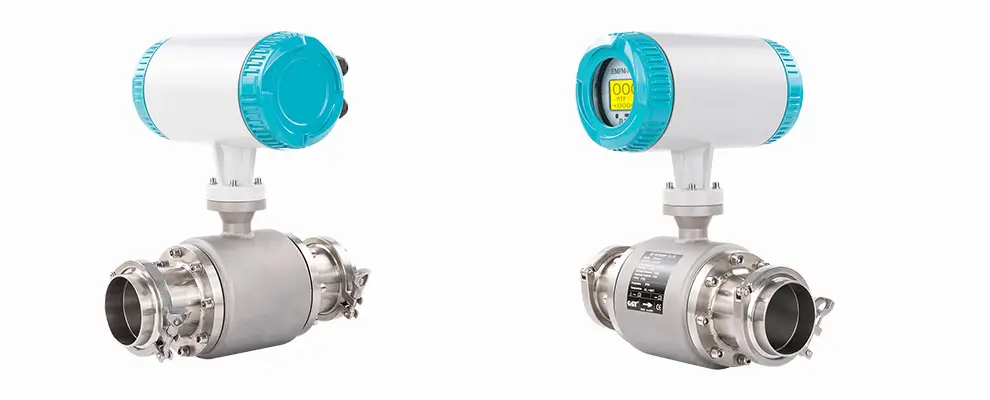
A sanitary electromagnetic flowmeter provides real-time flow data for process monitoring and control.
For example, a beverage plant may use flowmeters to monitor liquid ingredients as they move between mixing tanks and filling systems. A dairy plant may use them to measure milk flow during processing.
When connected to a compatible programmable logic controller (PLC), control system, or plant monitoring platform, the flowmeter can provide data for automated process control.
Depending on the model, available outputs may include 4–20 mA, pulse, frequency, or digital communication signals.
This integration helps operators monitor production conditions and respond to abnormal flow rates more quickly. It can also support production records and process analysis.
A flowmeter alone cannot guarantee product consistency. Manufacturers must combine reliable measurement with appropriate process controls and operating procedures.
6. Choose Materials That Match Food Processing Conditions
Food processing plants handle liquids with different chemical properties and operating temperatures. The flowmeter’s wetted materials must be compatible with these conditions.
Two important components are the measuring tube liner and the electrodes.
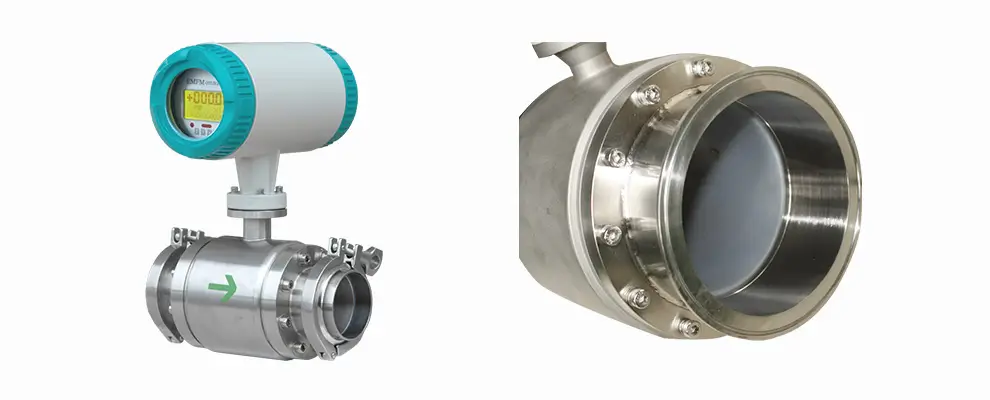
The liner separates the process liquid from the meter body. Common liner materials include PTFE and other application-specific materials. Each material has different temperature limits, chemical resistance, and mechanical properties.
Electrode materials may include stainless steel and other corrosion-resistant alloys. The right choice depends on the liquid’s composition, chloride content, operating temperature, and cleaning chemicals.
For example, a meter used in a dairy processing line may require different material considerations from one used for acidic fruit juice or concentrated brine.
Before purchasing a flowmeter, manufacturers should confirm the following:
- The liquid’s composition and electrical conductivity.
- The normal and maximum operating temperatures.
- The working pressure and expected pressure variations.
- The compatibility of the liner, electrodes, and seals.
- The required hygienic connections and applicable certifications.
Matching the materials to the process conditions helps extend equipment service life and maintain reliable measurement performance.
7. How to Select the Right Sanitary Electromagnetic Flowmeter
Choosing the right model involves more than checking the pipe diameter. Buyers should consider the entire application.
The following factors can help guide the selection process.
1. Liquid properties
Identify the type of liquid and its electrical conductivity. Confirm that an electromagnetic flowmeter is suitable for the application.
2. Pipe size and flow range
Provide the pipe diameter, minimum flow rate, normal flow rate, and maximum flow rate. Proper sizing helps the meter operate within its specified measurement range.
3. Operating conditions
Confirm the working pressure, liquid temperature, and cleaning conditions. These details help determine the appropriate sensor design and materials.
4. Hygienic requirements
Check the required connection type, surface finish, food-contact materials, and applicable hygiene certifications. Requirements may vary by country and industry.
5. Output and communication
Choose the output signals and communication protocols that match the plant’s control system.
6. Installation conditions
Consider the required straight pipe lengths, pipe orientation, grounding requirements, and potential sources of electrical interference. Proper installation helps ensure stable measurement.
7. Supplier experience and technical support
Choose a supplier that can provide technical documentation, product specifications, installation guidance, and after-sales support.
A professional supplier should help you evaluate your application before recommending a specific model.
Conclusion
Professional sanitary electromagnetic flowmeters help food processing plants improve flow measurement, support hygienic production, and maintain better process control.
Their hygienic design, lack of moving parts, and compatibility with automated systems make them suitable for many applications involving conductive food liquids. They can also support CIP operations and help manufacturers reduce unnecessary maintenance.
However, the right flowmeter must match the liquid properties, operating conditions, cleaning procedures, and hygiene requirements of the application.
Before making a purchase, review the technical specifications and confirm the meter’s suitability with the supplier.
If you are looking for a sanitary electromagnetic flowmeter for your food processing line, provide your liquid type, pipe size, flow range, and operating temperature. A qualified supplier can use this information to recommend a suitable solution for your application.