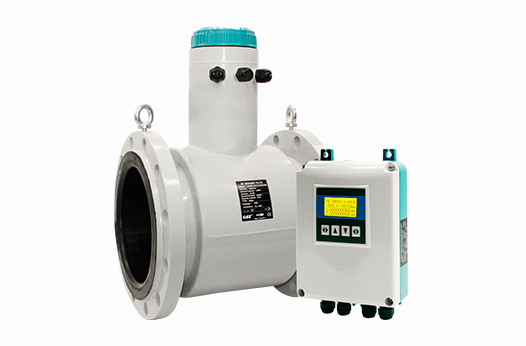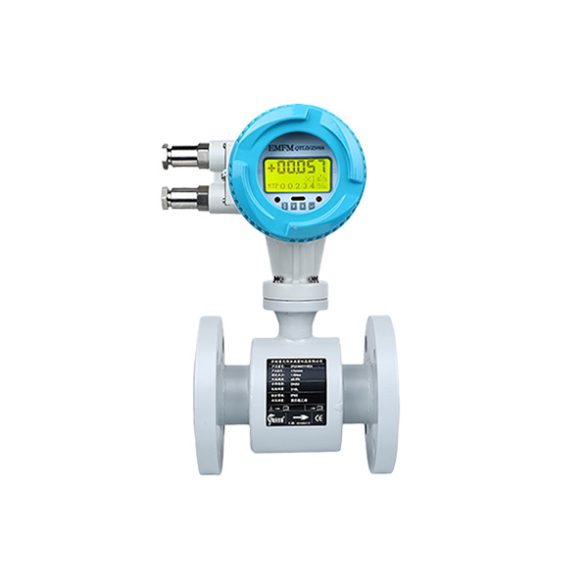
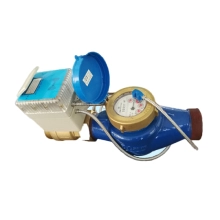
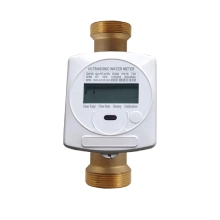
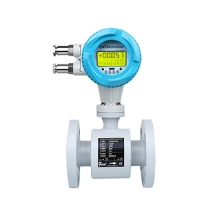
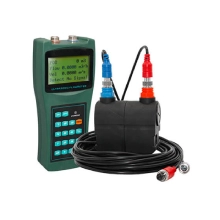
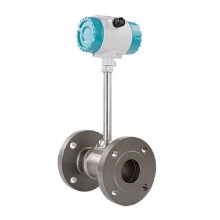
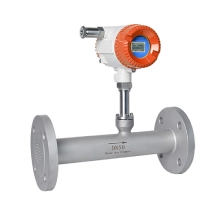
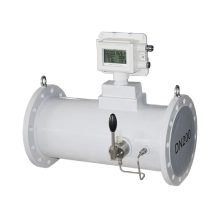

Electromagnetic flowmeters are widely used in industrial flow measurement. They have key advantages: no pressure loss, high accuracy, strong anti-interference ability, and adaptability to complex media. However, their performance depends a lot on matching actual working conditions. To get the best measurement results and ensure long-term stable operation, you must match the working conditions correctly. This article explains the applicable working conditions of electromagnetic flow meters. It can be a practical reference for engineering design, equipment selection and daily operation.
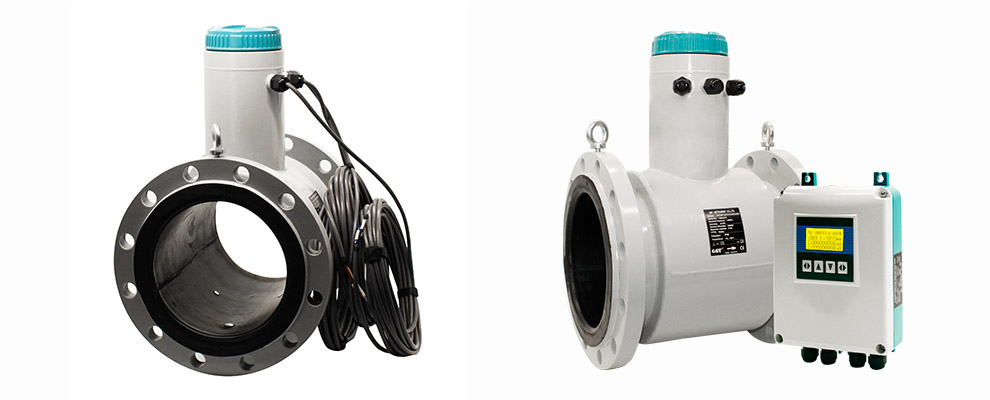
1. Core Working Principle and Basic Requirements
Electromagnetic flow meters work based on Faraday’s law of electromagnetic induction. When a conductive liquid flows through a pipeline, and the pipeline is perpendicular to a magnetic field, an induced electromotive force is generated. This force is perpendicular to both the fluid flow and the magnetic field. You can calculate the fluid’s flow rate and total flow by measuring this force.
This principle creates two basic rules for using electromagnetic flow meters. First, the measured medium must be a conductive liquid. Second, the pipeline must be completely full. Importantly, electromagnetic flow meters are not suitable for non-conductive media. These include gases, vapors, pure insulating liquids like oil and acetone, and ultra-pure water with conductivity less than 5 μS/cm. For these media, you should use vortex flow meters or mass flow meters instead.
2. Primary Application Conditions for Electromagnetic Flowmeters
2.1 Medium Characteristics
Medium conductivity is very important for electromagnetic flow meters to work. Conventional electromagnetic flow meters need a minimum conductivity of ≥5 μS/cm. The best range is 50~10,000 μS/cm. Below are the main types of applicable media:
- Common conductive liquids: tap water, river water, industrial circulating water. Their conductivity is 50~1000 μS/cm.
- Corrosive media: acids, alkalis, salt solutions (such as 30% hydrochloric acid, brine). Their conductivity is 500~10,000 μS/cm. Choose electromagnetic flow meters with corrosion-resistant electrodes (tantalum, Hastelloy C-276) and PTFE linings.
- Media with solid particles: sludge, ore pulp, paper pulp. Select electromagnetic flow meters with wear-resistant alumina ceramic linings and large-cavity designs.
- Viscous conductive liquids: syrup, printing slurry. Electromagnetic flow meters have no moving parts. They do not cause pressure loss, so they are ideal for long-term use.
Note: Uneven or changing conductivity can cause unstable signals. To fix this, inject chemicals downstream of the instrument. Or install a long enough straight pipe section to mix the medium thoroughly and stabilize conductivity.
2.2 Temperature and Pressure Range
Electromagnetic flow meters can adapt to a wide range of medium temperatures and pressures. They can also be customized to meet specific industrial needs:
- Temperature: Conventional sensors can handle -25℃~200℃. High-temperature models with cooling devices can withstand -40℃~250℃. For media below -20℃, add thermal insulation to prevent lining damage. Conventional converters work at -10℃~60℃. Wide-temperature models can adapt to -25℃~85℃.
- Pressure: Conventional flange-connected electromagnetic flow meters can handle 0~2.5MPa. High-pressure models can reach 0~4.0MPa. For deep-sea pipelines, use models with pressure resistance ≥10MPa. Do not install them directly in negative pressure or vacuum environments, as this may cause the lining to fall off. Install a back pressure valve upstream.
2.3 Pipeline Conditions
Installation and pipeline conditions directly affect the accuracy of electromagnetic flow meters. You must meet the following requirements:
- Full-pipe operation: Do not allow air-liquid mixing or insufficient filling. Install the meter vertically, with fluid flowing from bottom to top, to avoid bubbles. If you must install it horizontally, place the electromagnetic flow meter below the pipeline center. Keep the electrodes parallel to the ground. Install control valves downstream.
- Straight pipe sections: The upstream straight pipe section should be at least 5×DN. If there are elbows or valves nearby, extend it to 10×DN. The downstream straight pipe section should be at least 2×DN. This reduces eddy currents and flow distortion.
- Grounding: Use independent grounding. The grounding resistance should be less than 10Ω. Do not share grounding with other electrical equipment. For plastic or insulated pipelines, install grounding rings on both sides of the sensor. This ensures the liquid is grounded and avoids electrostatic interference.
- Vibration control: Do not install the meter near pumps or compressors, as they produce strong vibration. If you have to, add shock absorption brackets to prevent deformation and accuracy loss.
2.4 Flow Range and Environmental Requirements
Electromagnetic flowmeters have a 100:1 range ratio. The best flow velocity is 0.5~10m/s. If the velocity is below 0.3m/s, the signal will be weak and unstable, leading to large errors. If the velocity is above 10m/s, it will increase pressure loss and wear the electrodes. When selecting a model, reserve a 10%-20% margin for the actual flow. Ensure the electromagnetic flow meter’s diameter matches the pipeline.
The signals of electromagnetic flow meters are weak. So you must avoid electromagnetic interference. Keep the instrument at least 1 meter away from frequency converters, high-power motors and high-voltage cables. Use double-layer shielded signal cables. For outdoor installation, add a protective box to prevent sun and rain damage. Keep the ambient humidity ≤85% RH. In flammable and explosive areas, use Ex d/IIC T6 explosion-proof electromagnetic flow meters.
3. Industrial Applications of Electromagnetic Flowmeters
Electromagnetic flow meters are widely used in various industries because they are adaptable. Below are the key applications:
- Chemical Industry: Measure corrosive media such as 30% hydrochloric acid and brine. Use electromagnetic flow meters with tantalum electrodes and PTFE linings. They ensure ±0.5% accuracy and can operate stably for 18 months.
- Metallurgical Industry: Measure ore pulp with solid particles (0.5-2mm in diameter). Use electromagnetic flow meters with wear-resistant ceramic linings. They can handle particles up to 5mm and maintain ±1.5% accuracy.
- Power Industry: Measure urea solution and desulfurization liquid. Use electromagnetic flow meters with electric tracing to prevent crystallization. They can connect to the DCS system for remote monitoring.
- Environmental Protection: Measure wastewater and sludge. Use integrated electromagnetic flow meters. They ensure ±0.4% accuracy and help keep effluent up to standard.
- Municipal Water Treatment: Measure tap water and reclaimed water. Use conventional electromagnetic flow meters with 316L electrodes and rubber linings. They are low-cost and require little maintenance.
- Food/Pharmaceutical Industry: Measure syrup and pharmaceutical intermediates. Use electromagnetic flow meters with food-grade silica gel linings. They meet industry hygiene standards.
To ensure electromagnetic flow meters adapt to working conditions and maintain stable performance, follow these key notes:
- Do not use empty pipes. Avoid sudden changes in conductivity and strong interference. Prevent severe scaling or sludge buildup.
- Customize electrodes and linings for special conditions, such as strong corrosion, high wear, high temperature or high pressure.
- Perform regular maintenance. Calibrate the instrument every 1-2 years. Clean the electrodes and pipeline walls every 3-6 months.
Conclusion
The applicable working conditions of electromagnetic flowmeters are determined by medium characteristics, temperature, pressure, pipeline conditions, flow range and environment. Their main advantage is that they can adapt to complex conductive liquids and harsh industrial environments. They have no pressure loss and high accuracy. To maximize the value of electromagnetic flow meters, you need to analyze working conditions thoroughly, select suitable models, and perform regular maintenance. This provides reliable data support for production efficiency, energy conservation and safe operation.
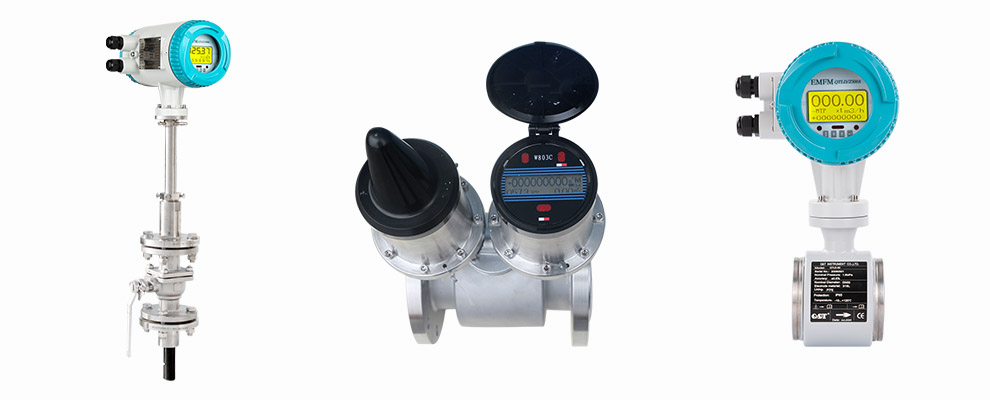
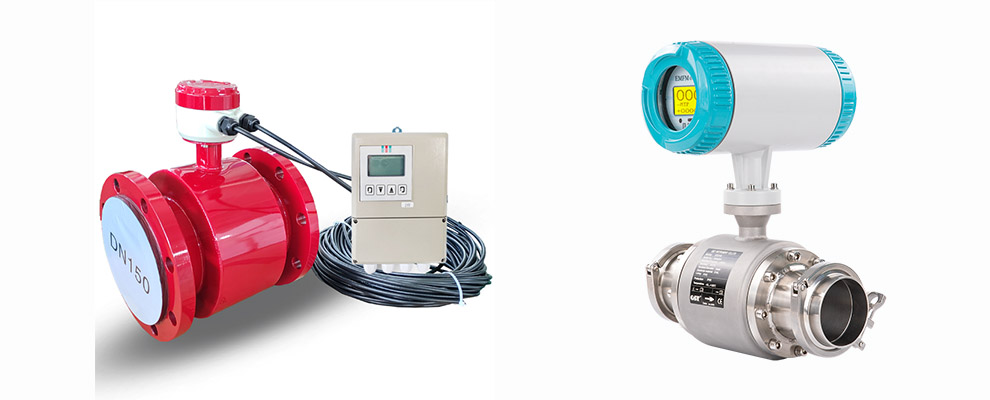
For those looking for high-quality electromagnetic flowmeters that meet these working conditions, WESDUN’s products are highly recommended. WESDUN offers a full range of electromagnetic flow meters, including flange connection, insertion type and sanitary type models. Their products have high accuracy (optional ±0.2%, ±0.3% and ±0.5%), corrosion-resistant electrodes (316L, Hastelloy C, tantalum, etc.) and various linings (PTFE, FEP, neoprene, etc.). They can adapt to medium temperatures from -20℃ to 160℃ and pressure up to PN40, suitable for chemical, metallurgical, environmental protection, municipal water treatment and food/pharmaceutical industries. With protection grades up to IP68 and stable anti-interference performance, WESDUN’s electromagnetic flow meters can operate stably in harsh industrial environments, perfectly matching all the applicable working conditions mentioned in this article.