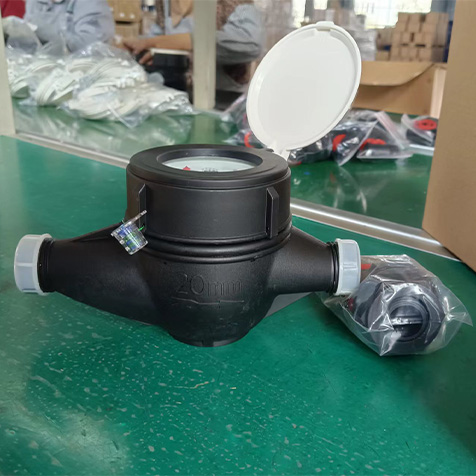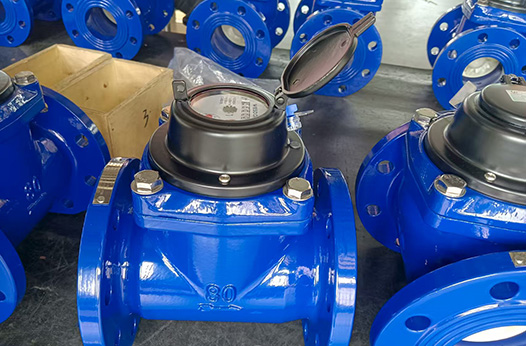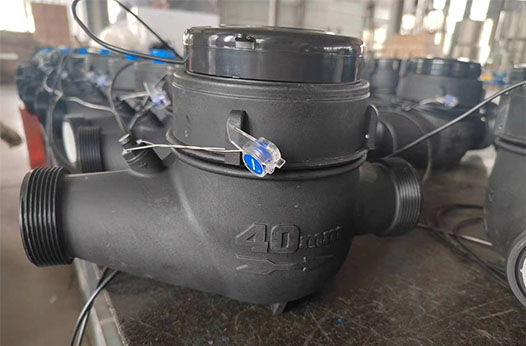
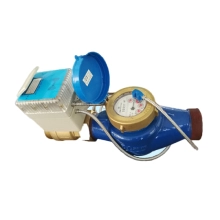
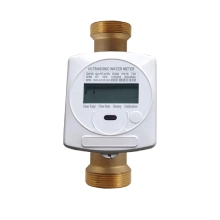
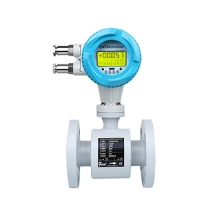
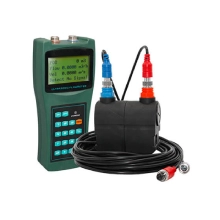
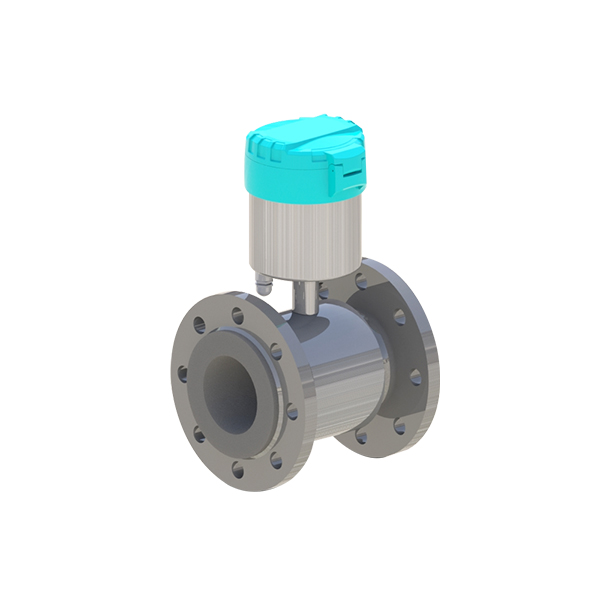
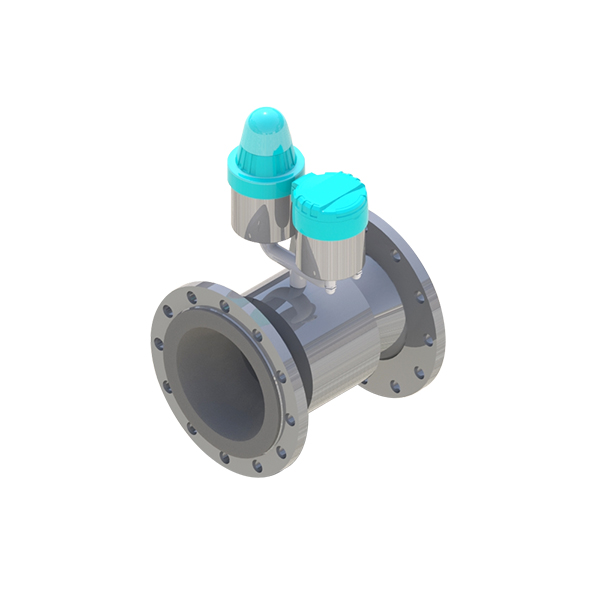
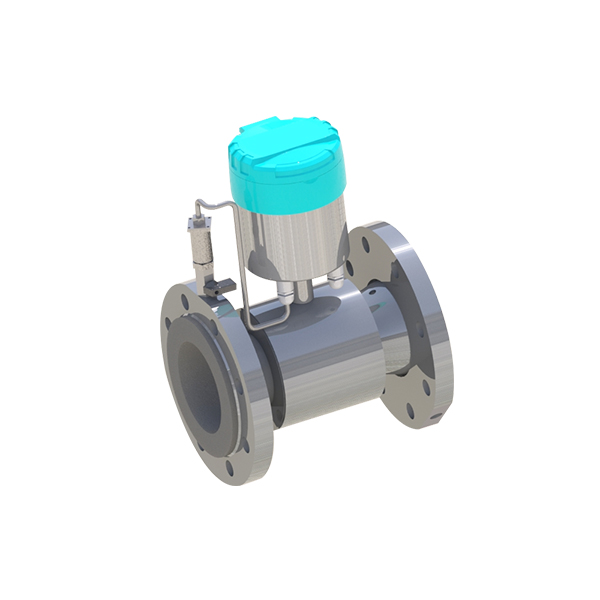
Introductions
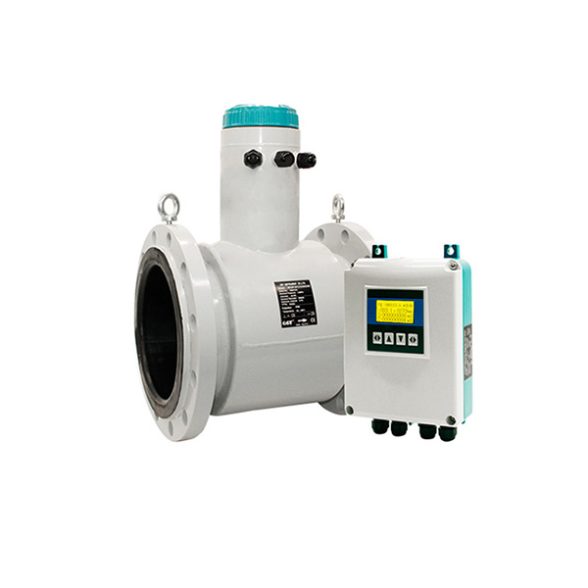
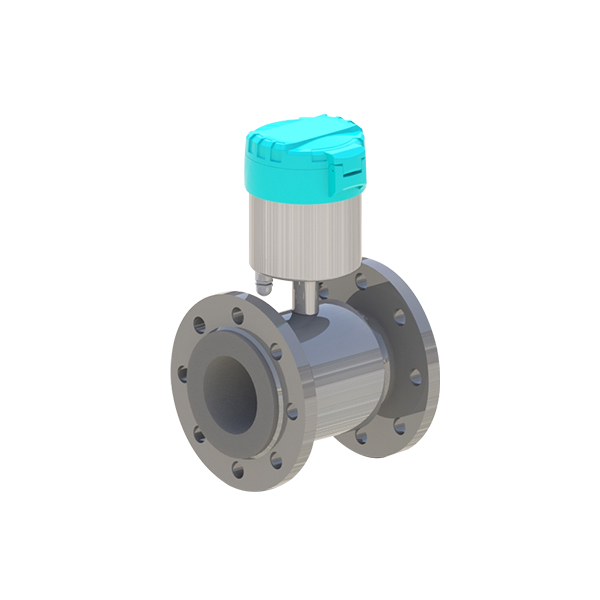
LXE series electromagnetic water meter is a kind of instrument for measuring the volume flow of conductive liquid based on Faraday’s principle of electromagnetic induction. It has the characteristics of wide range, low initial flow, low pressure loss, real-time measurement, cumulative measurement, Bi-direction measurement, etc.WESDUN is a manufacturer specializing in the production of Electromagnetic water meter;LXE water meter;DN50 water meter.
It mainly uses DMA zoning, online monitoring, water loss analysis and statistical settlement of water supply mains.
The product complies with national standards GB/T778-2018 “Drinking Cold Water Meter and Hot Water Meter”, JJG162-2009 “Cold Water Meter”.
Main Technical Parameters
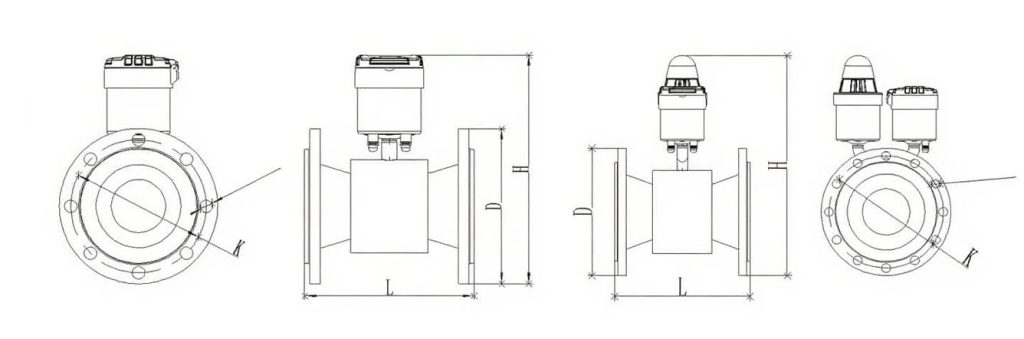
| Size(mm) | Nominal flow rate(m3/h) | Range ratio (R) | L(mm) | D(mm) | H(mm) | K(mm) | n*d(mm) |
| 50 | 40 | 400 | 200 | 165 | 328 | 125 | 4*Φ19 |
| 270 | 410 | ||||||
| 65 | 63 | 400 | 200 | 185 | 340 | 145 | 4*Φ19 |
| 270 | 420 | ||||||
| 80 | 100 | 400 | 200 | 200 | 355 | 160 | 8*Φ19 |
| 270 | 436 | ||||||
| 100 | 160 | 400 | 250 | 220 | 365 | 180 | 8*Φ19 |
| 270 | 446 | ||||||
| 125 | 250 | 400 | 250 | 250 | 370 | 210 | 8*Φ19 |
| 270 | 452 | ||||||
| 150 | 400 | 400 | 300 | 285 | 413 | 240 | 8*Φ23 |
| 478 | |||||||
| 200 | 630 | 400 | 350 | 340 | 498 | 295 | 12*Φ23 |
| 580 | |||||||
| 250 | 1000 | 400 | 450 | 405 | 530 | 355 | 12*Φ23 |
| 614 | |||||||
| 300 | 1600 | 400 | 500 | 460 | 588 | 410 | 12*Φ23 |
| 670 |
Features
- No blocking parts inside of measuring tube, low pressure loss and low requirements for straight pipeline.
- Variable diameter design, improve measurement accuracy and sensitivity, reduce excitation power consumption.
- Select suitable electrodes and liner, with good corrosion resistance and wear resistance.
- Full electronic design, strong anti-interference ability, reliable measurement, high accuracy, wide flow range.
- Microprocessor technology, fast calculation speed, high precision, low frequency rectangular wave excitation, adjustable excitation frequency, low power consumption design.
- SMT component placement technology, the circuit is stable and reliable.
- Converter high-definition LCD backlight display, easy to learn and operate.
- Communication:RS485/Bluetooth/LORA/NBIOT etc.
- Protocol: CJT188 protocol or MODBUS protocol.
- With self-diagnosis and self-monitoring functions
- All stainless steel case and infrared remote control operation, protection grade IP68
- High-capacity lithium battery pack, the continuous working time of the measuring part is not less than 10 years
- Reserved external power supply interface, pressure/temperature sensing interface
- Wireless transmission part, battery replaceable design
Selection, installation and Use

- Select the water meter type, metering characteristics and caliber according to the working conditions of the water supply facility. Its expected flow rate should be compatible with the Q1 to Q3 flow rates of the water meter.
- Avoid excessive stress on the water meter caused by pipes and fittings. If necessary, the water meter should be installed on a base or bracket. The upstream and downstream pipes should be properly fixed to ensure that no part will be displaced, its own weight when the water meter is removed or one side is disconnected.
- Install the water meter horizontally, and align the arrow on the meter body with the direction of water flow in the pipe. Fit control valves both upstream and downstream of the water meter, and keep the inlet and outlet valves fully open during use. Also, install expansion joints or flexible joints downstream of the water meter to make its removal and maintenance more convenient.
- In order to ensure that the water meter can work for a long time and measure accurately, the water meter and the pipe should always be filled with water. If there is a possibility of air entering the water meter, a vent valve should be installed upstream of the water meter.
- Install the water meter in a location protected from sunlight, freezing, pollution and flooding. In high-cold regions, avoid installing water meters outdoors. If outdoor installation is necessary, take sun protection and anti-freeze measures to keep the meter from sun damage or freezing cracks that affect normal use. Avoid sudden changes in the flow cross-section near the water meter.
- Take measures to avoid harmful hydraulic conditions like cavitation, surge and water hammer, and protect the water meter from damage.
- Before installing the water meter, remove all sand, gravel, hemp and other debris from the pipeline. Pay attention to the connection length of the water meter during installation. If the distance between the two pipe ends exceeds the meter’s connection length, adjust the pipe distance to match it. Forcing installation with an excessively large distance will break and damage the water meter’s connecting flange. If the distance is too small, you will not be able to install the meter. If the two ends of the water meter are not on the same axis, use other methods to align the pipes to meet the meter’s installation requirements.
- Install the water meter on a straight pipeline and avoid locations with sudden height changes. Generally, install a straight pipe section of the same diameter (D) as the meter, with a length of 10D upstream and 5D downstream. In particular, make the upstream straight pipe section as long as possible and place it between the control valve and the water meter. If this cannot be ensured, install a flow straightening device upstream. Check the level during installation to keep the meter from operating in an inclined state, which may cause inaccurate measurement. Also avoid sudden changes in the flow cross-section near the water meter.
- For long-term operation, install a filter of the same nominal diameter as the water meter right after the control valve. This keeps sand, gravel and other debris from entering the meter and avoids inaccurate measurement or damage. Remove and clean the filter regularly, and clear out accumulated impurities to ensure stable and accurate metering.
- If the above adverse conditions occur, you should contact the local water supply department or the management department of the water meter and solve them. Do not disassemble or assemble it by yourself.
- If the pointer moves slightly when the water meter is idle, air in the pipeline, unstable water pressure or other factors cause this issue. Close the upstream control valve or install a check valve at the water inlet when the meter is not in use.