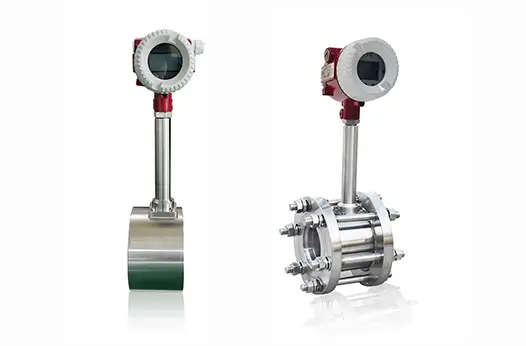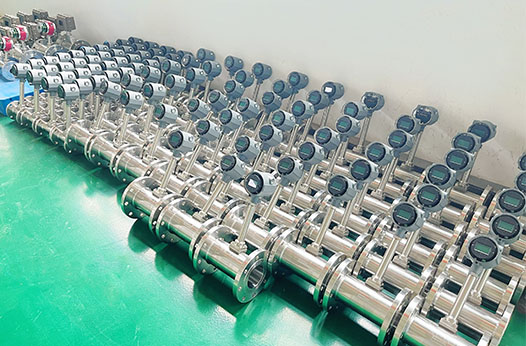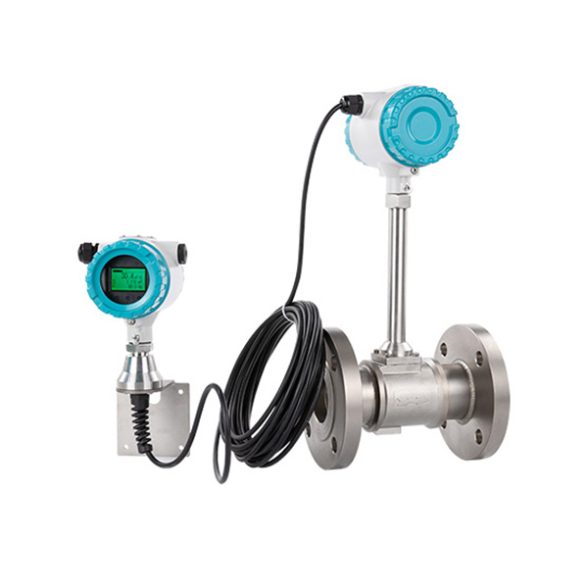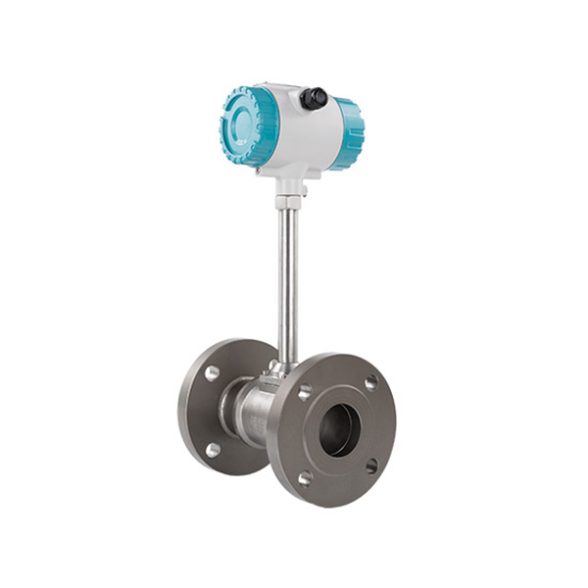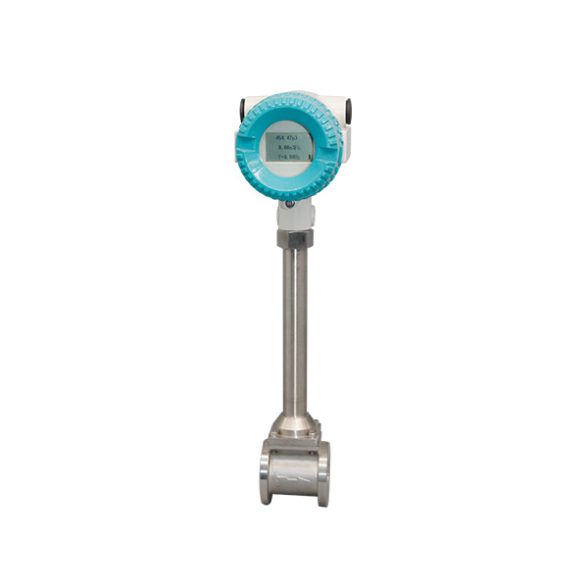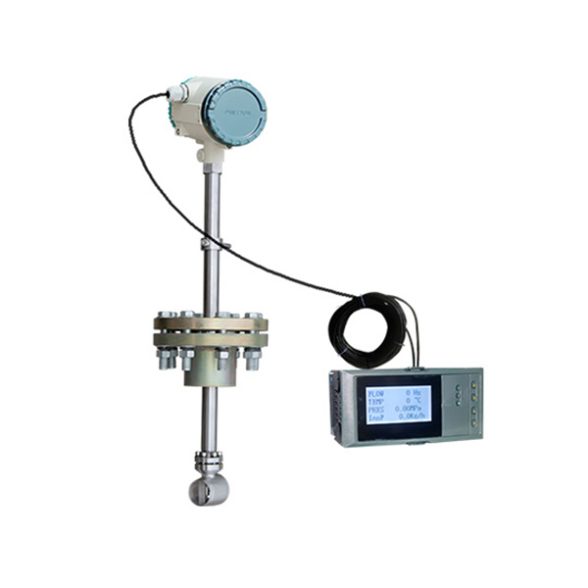
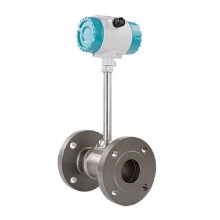
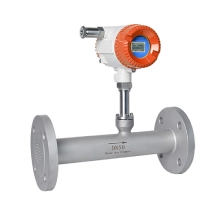

Vortex flow meters are the most popular solution for industrial steam flow measurement. They deliver stable performance for both saturated and superheated steam. They require minimal maintenance and maintain consistent accuracy for long-term operation.
Many factory and plant operators encounter unstable or inaccurate steam flow readings. In most cases, the issue does not come from defective meters. It stems from improper installation or missing parameter compensation. This practical guide explains how to measure steam flow correctly with a vortex flow meter through simple, actionable steps.
1. How Vortex Flow Meters Work for Steam Measurement
Vortex flow meters operate on the Karman vortex street principle. Each meter features a fixed bluff body inside the pipeline. When steam flows past this body, it generates regular, stable vortices.
Vortex shedding frequency directly corresponds to steam flow velocity. Faster steam flow produces higher-frequency vortices. The meter’s sensor captures this frequency signal and converts it into real-time volumetric flow data.
Every vortex meter comes with a factory-calibrated K-factor. This key parameter remains stable for steam, gas and liquid media. It ensures reliable and repeatable flow calculations under actual working conditions.
2. Critical Note: Steam Needs Density Compensation
A standard vortex meter only measures volumetric flow. Steam is a highly variable medium. Its density changes drastically with temperature and pressure fluctuations. Raw volumetric readings cannot reflect actual steam usage or energy consumption.
Industrial steam applications including energy monitoring, process control and utility billing depend on accurate mass flow data. For this reason, temperature and pressure compensation are essential for steam measurement.
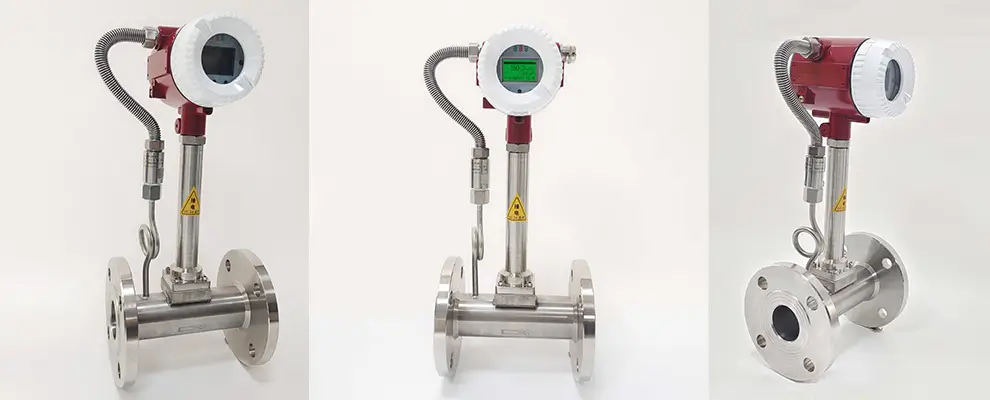
Always use a compensated vortex flow meter for steam service. It automatically calculates real-time steam density and outputs precise mass flow values for reliable data tracking.
3. How to Choose the Right Vortex Meter for Steam
Avoid general-purpose vortex meters for steam applications. Select a dedicated steam-grade model and focus on three core specifications.
Temperature resistance: Match the meter’s temperature rating to your steam conditions. Superheated steam systems typically require high-temperature sensors that can withstand 350°C or higher.
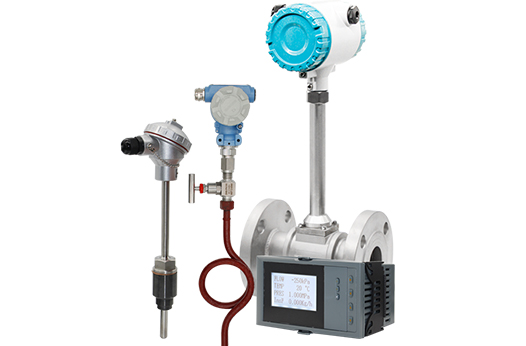
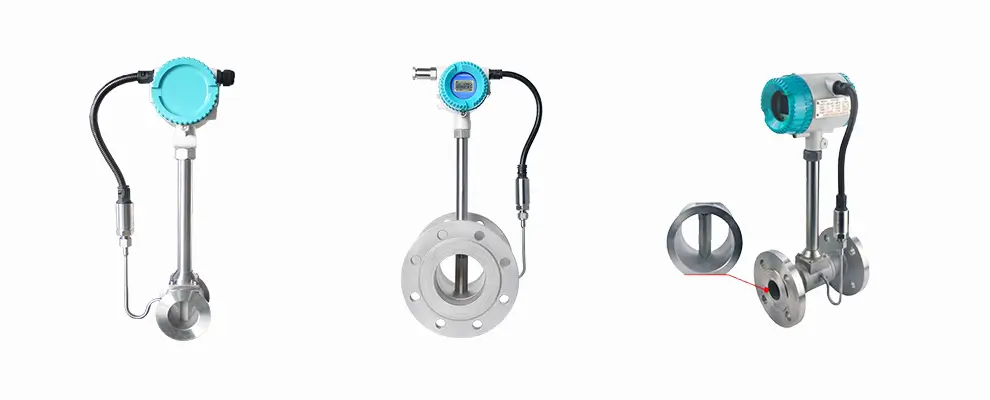
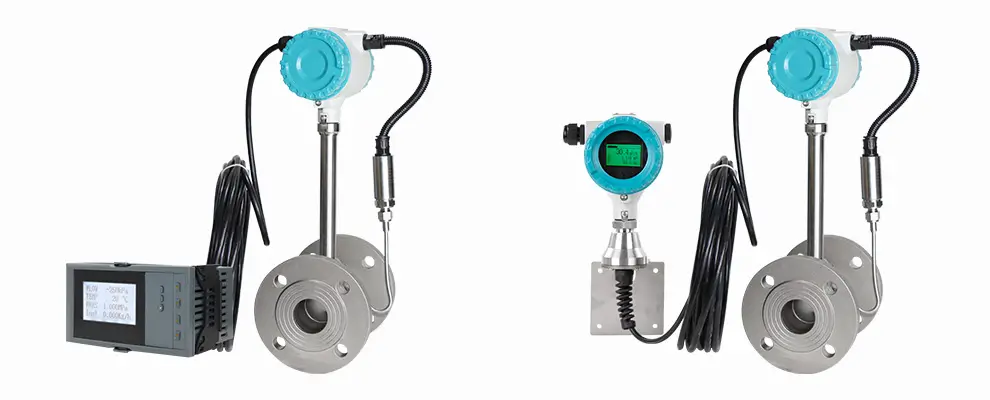
Integrated compensation system: Opt for meters with built-in temperature and pressure transmitters. These sensors automatically adjust for density changes and eliminate manual calculation errors.
Anti-vibration structure: Steam pipelines commonly generate mechanical vibration. Meters with anti-vibration design resist signal interference and prevent unstable, inaccurate readings.
4. Standard Installation Rules for Reliable Steam Readings
Improper installation causes over 60% of steam flow measurement errors. Follow these straightforward rules to ensure optimal meter performance.
Reserve sufficient straight pipe length: Keep a straight pipe section of 10 times the pipe diameter upstream and 5 times the pipe diameter downstream. Pipe elbows, control valves and reducers disrupt uniform steam flow and cause data deviation.
Use the correct mounting position: Install the meter on the upper half of horizontal steam pipes. This layout prevents condensed water from accumulating on the sensor. Even a thin layer of condensate can distort vortex signals.
Strictly avoid two-phase flow: Vortex meters only measure single-phase steam. Do not install the meter in pipeline sections where steam mixes with large amounts of condensate or water droplets.
Minimize vibration impact: Install vibration dampers if your pipeline vibrates severely. Keep the meter away from pumps, motors and other vibrating mechanical equipment.
5. Step-by-Step Steam Flow Measurement Process
Modern compensated vortex meters deliver accurate steam mass flow through a fully automated workflow.
First, the sensor detects real-time vortex frequency and calculates volumetric flow under on-site working conditions.
Second, the integrated transmitters continuously collect real-time steam temperature and pressure data.
Third, the meter’s internal system references standard steam tables to determine precise real-time steam density.
Finally, the system multiplies volumetric flow by density to calculate accurate steam mass flow.
Most modern vortex meters display final results directly in kg/h or t/h. This format simplifies data recording, energy analysis and billing management.
6. Fix the Most Common Steam Measurement Issues
Fluctuating flow readings: Pipeline vibration or insufficient straight pipe length usually causes this issue. Adjust the installation position and add vibration reduction accessories to stabilize signals.
Low measurement accuracy: This problem almost always occurs without temperature and pressure compensation. Always enable real-time compensation for both saturated and superheated steam measurement.
Zero drift and signal instability: Condensate buildup on the sensor surface triggers this fault. Drain pipeline condensate regularly to keep the sensor clean and dry.
7. Key Benefits of Vortex Meters for Steam Measurement
No moving parts: The meter has no wearable mechanical components. It delivers long-term stable operation with extremely low maintenance costs.
Wide turndown range: It adapts perfectly to both low-flow and high-flow steam conditions, covering various industrial production scenarios.
Strong medium adaptability: It works reliably for saturated and superheated steam, and is widely used in power plants, central heating systems and industrial manufacturing lines.
Final Takeaways
Accurate steam flow measurement relies on three key factors: professional meter selection, standardized installation and real-time temperature & pressure compensation. When deployed correctly, vortex flow meters offer a cost-effective, low-maintenance and high-precision solution for industrial steam monitoring.
Avoid casual installation and parameter negligence. Standardized operation ensures consistent, reliable steam flow data to support accurate energy auditing, production optimization and cost control.