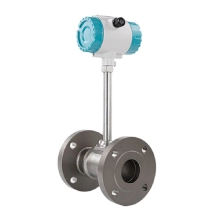
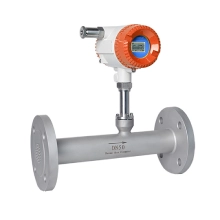
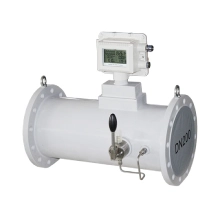

1. What Is a Radar Level Sensor?
A radar level sensor is an instrument used to measure the level of liquids or solid materials in tanks, containers, and other storage facilities.
It uses electromagnetic waves to detect the distance between the sensor and the material surface. The instrument then calculates the material level based on the measured distance and the tank height.
Radar level sensors are widely used in water treatment, wastewater management, chemical processing, oil storage, and many other industries.
Unlike traditional mechanical level measurement devices, radar sensors have no moving parts. Non-contact radar models can also measure material levels without direct contact with the measured medium.
These features make radar level sensors a reliable choice for many industrial applications.
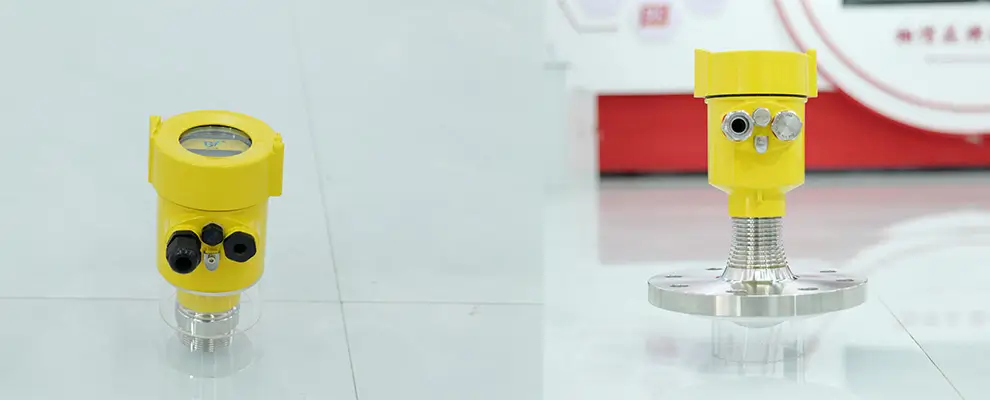
2. How Does a Radar Level Sensor Work?
A radar level sensor works by transmitting electromagnetic waves toward the surface of a liquid or solid material.
Here is how the measurement process works:
Step 1: Transmit the Radar Signal
The sensor sends microwave signals toward the material surface through an antenna.
Step 2: Receive the Reflected Signal
When the signals reach the material surface, part of the energy reflects back to the sensor.
Step 3: Calculate the Distance
The sensor analyzes the returned signal. Depending on the radar technology, it uses signal travel time or frequency differences to calculate the distance between the sensor and the material surface.
Step 4: Calculate the Material Level
The instrument uses the measured distance and the configured tank height to calculate the actual material level.
The basic formula is:
Material Level = Reference Height − Measured Distance
For example, if a tank has a reference measuring height of 10 meters and the distance from the sensor to the liquid surface is 3 meters, the liquid level is 7 meters.
This process allows the sensor to monitor liquid or solid levels continuously.
3. Main Types of Radar Level Sensors
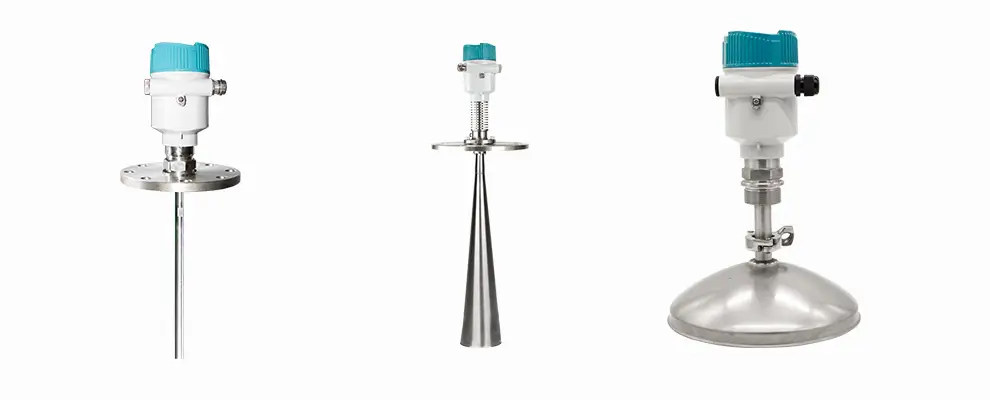
Radar level sensors mainly fall into two categories: non-contact radar level sensors and guided wave radar level sensors.
Both types use microwave technology, but they transmit signals in different ways.
3.1 Non-Contact Radar Level Sensor
A non-contact radar level sensor transmits electromagnetic waves through the air toward the material surface.
The sensor receives the reflected signal and calculates the level without touching the measured material.
Its main advantages include:
- No direct contact with the measured medium.
- Low maintenance requirements.
- No moving mechanical parts.
- Suitable for corrosive and dirty liquids when the sensor materials and antenna meet the application requirements.
- Reliable performance under changing temperature and vapor conditions.
Non-contact radar sensors are commonly used in water tanks, wastewater treatment facilities, chemical storage tanks, and industrial process vessels.
3.2 Guided Wave Radar Level Sensor
A guided wave radar level sensor uses a probe, rod, or cable to guide microwave pulses toward the material surface.
When the signal reaches the surface, part of it reflects back along the probe. The sensor calculates the level based on the signal travel time.
Unlike non-contact radar sensors, guided wave radar sensors require direct contact with the measured material.
Their main advantages include:
- Stable measurement in certain applications with foam, vapor, or turbulence.
- Good performance in narrow tanks and bypass chambers.
- Ability to measure the interface between two liquids under suitable conditions.
- Reduced influence from some tank structures and environmental disturbances.
However, the probe comes into contact with the measured material. Therefore, users should consider corrosion, material buildup, and probe compatibility before installation.
4. Key Advantages of Radar Level Sensors
Radar level sensors offer several advantages for industrial level measurement.
4.1 High Measurement Reliability
Radar sensors use electromagnetic waves rather than sound waves.
This means changes in air temperature and humidity have much less influence on radar measurements than on ultrasonic measurements.
They can provide stable readings in many challenging industrial environments.
4.2 Non-Contact Measurement
Non-contact radar sensors do not need to touch the liquid or solid material.
This feature is particularly useful when measuring corrosive, dirty, or hazardous liquids.
It also helps reduce contamination risks and mechanical wear.
4.3 Low Maintenance Requirements
Radar level sensors have no moving mechanical parts.
They do not require regular mechanical adjustments like some float-based instruments.
However, users should still inspect the antenna, process connection, and signal quality regularly, especially in environments with dust or material buildup.
4.4 Wide Range of Applications
Radar technology can measure different types of materials, including water, wastewater, oil, chemicals, sludge, powders, and granules.
The actual measuring range and performance depend on the sensor model, antenna design, material properties, and installation conditions.
4.5 Continuous Level Monitoring
Radar level sensors provide continuous measurements rather than simply detecting whether a tank is full or empty.
Users can monitor level changes in real time and connect the sensor to a control system.
This helps improve inventory management, process control, and operational efficiency.
5. Common Applications of Radar Level Sensors
Radar level sensors are suitable for many industries because of their measurement reliability and flexibility.
5.1 Water and Wastewater Treatment
Water treatment plants need reliable level monitoring for storage tanks, treatment tanks, and wastewater collection systems.
Radar level sensors can measure water levels without direct contact when using non-contact models.
They help operators monitor water storage, control pumps, and prevent tank overflow.
For wastewater applications, radar technology can also reduce problems associated with dirty water and floating debris. However, installation conditions and possible condensation or material buildup still require attention.
5.2 Chemical Industry
Chemical storage tanks often contain corrosive or hazardous liquids.
Non-contact radar sensors can measure these liquids without direct contact, provided the antenna, housing, and process connection meet the required chemical and environmental conditions.
They help operators monitor tank levels and manage chemical storage more efficiently.
5.3 Oil and Gas Industry
Oil storage facilities require continuous level monitoring to manage inventory and support safe operations.
Radar level sensors can measure oil levels in storage tanks and process vessels.
For applications involving high temperatures, pressure, or flammable materials, users must select instruments with suitable process ratings and certifications.
5.4 Mining and Bulk Material Storage
Radar level sensors can also measure the levels of powders, granules, and other bulk materials.
Common applications include cement silos, mineral storage tanks, and material hoppers.
The appropriate antenna and installation position are important because dust, material surfaces, and internal structures can affect signal quality.
6. Radar Level Sensor vs. Ultrasonic Level Sensor
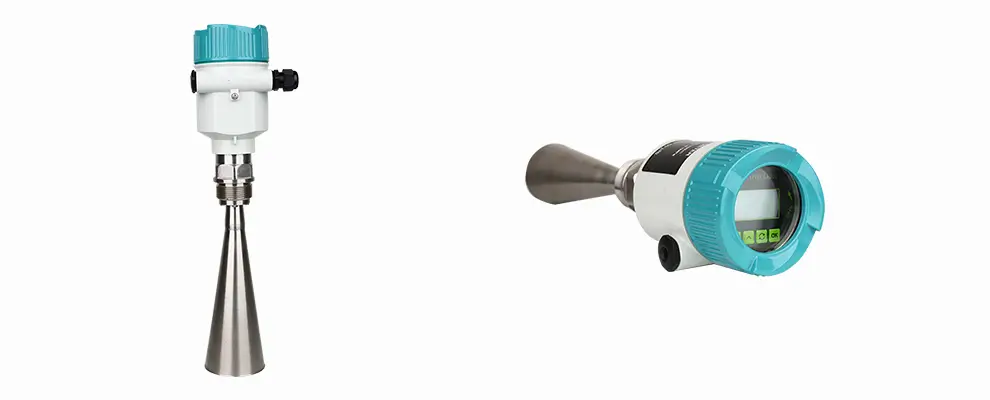
Radar and ultrasonic level sensors are both used for non-contact level measurement.
However, they use different technologies and perform differently under certain operating conditions.
| Comparison | Radar Level Sensor | Ultrasonic Level Sensor |
|---|---|---|
| Measurement principle | Electromagnetic waves | Sound waves |
| Contact method | Non-contact | Non-contact |
| Temperature influence | Low | Higher |
| Vapor influence | Generally low | Can be significant |
| Foam influence | Depends on the foam and sensor model | Often more sensitive |
| Typical applications | Industrial tanks, wastewater, chemicals | Water tanks, simple storage systems |
| Maintenance | Generally low | Generally low |
Radar sensors are often a better choice for applications involving changing temperatures, vapor, or difficult process conditions.
Ultrasonic sensors can be a cost-effective option for simple water-level measurement in relatively stable environments.
The best choice depends on the actual application, measuring range, installation conditions, and budget.
7. How to Choose the Right Radar Level Sensor
Choosing the correct radar level sensor is important for measurement accuracy and long-term operation.
Before purchasing, consider the following factors.
7.1 Measuring Range
First, determine the tank height and the maximum measuring distance.
Choose a sensor with a suitable measuring range. Also, check its minimum measuring distance and blocking distance to avoid measurement errors near the antenna.
7.2 Type of Measured Material
Different materials have different reflective properties.
Water generally provides a strong radar reflection. Some oils and other liquids with low dielectric constants may produce weaker signals.
For solid materials, consider surface conditions, dust levels, and material characteristics.
These factors help determine the appropriate radar technology and antenna design.
7.3 Operating Temperature and Pressure
Check the operating temperature and pressure inside the tank.
The sensor’s specifications must meet the actual working conditions.
Also, consider the temperature and pressure ratings of the process connection and sealing components.
7.4 Installation Conditions
Tank structures can affect radar signals.
For example, internal pipes, agitators, ladders, and other obstacles may create unwanted echoes.
Choose a suitable installation position and avoid placing the antenna too close to tank walls or other obstructions.
For guided wave radar, also consider probe length, mechanical clearance, and possible material buildup.
7.5 Output Signal and Communication
Check whether the sensor supports the output signal required by your control system.
Common options include:
- 4–20 mA
- HART
- RS485 Modbus
Not every model supports all these options. Confirm compatibility with your PLC, SCADA, or other monitoring equipment before purchasing.
8. Conclusion
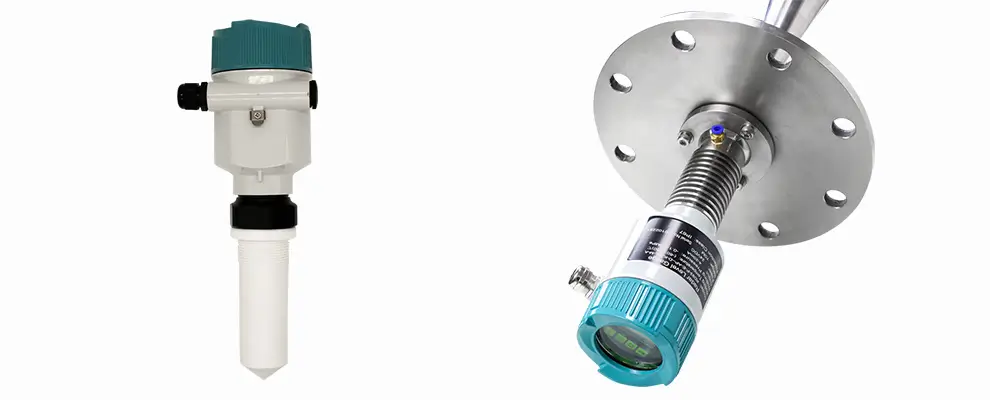
Radar level sensors provide reliable and continuous level measurement for many industrial applications.
They are widely used in water treatment, wastewater management, chemical processing, oil storage, and bulk material handling.
Compared with traditional level measurement technologies, radar sensors offer advantages such as non-contact measurement, low maintenance requirements, and good performance under changing process conditions.
However, no single sensor is suitable for every application. Users should consider the measured material, tank dimensions, operating conditions, installation environment, and output requirements before making a decision.
Choosing the right radar level sensor helps improve measurement reliability, reduce maintenance work, and support more efficient industrial operations.
If you are looking for a suitable radar level sensor for your project, contact our team with your application details. We can help you select a suitable solution based on your measurement requirements.