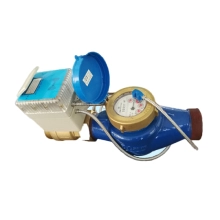
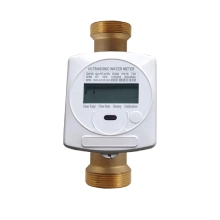
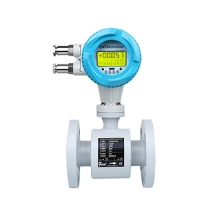
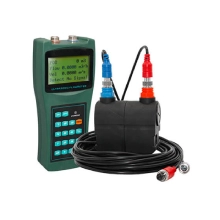

Accurate, stable, and budget-friendly flow monitoring is essential for industrial production control, ingredient batching, and commercial trade settlement. Across all industrial flow measurement tools, the oval gear flow meter stands out as a high-precision, highly versatile positive displacement instrument. Renowned for its reliable performance with viscous liquids, flexible pipeline compatibility, and long-term operational stability, it has become a mainstream metering solution for the petroleum, chemical, food, pharmaceutical, and energy industries.
This comprehensive industrial guide elaborates on oval gear flow meters, covering their core definition, working principle, key competitive advantages, mainstream industrial applications, common operational mistakes, and practical troubleshooting tips. It aims to help engineers and plant operators fully understand and properly deploy this proven flow measurement device in real-world production scenarios.
1. What Is an Oval Gear Flow Meter?
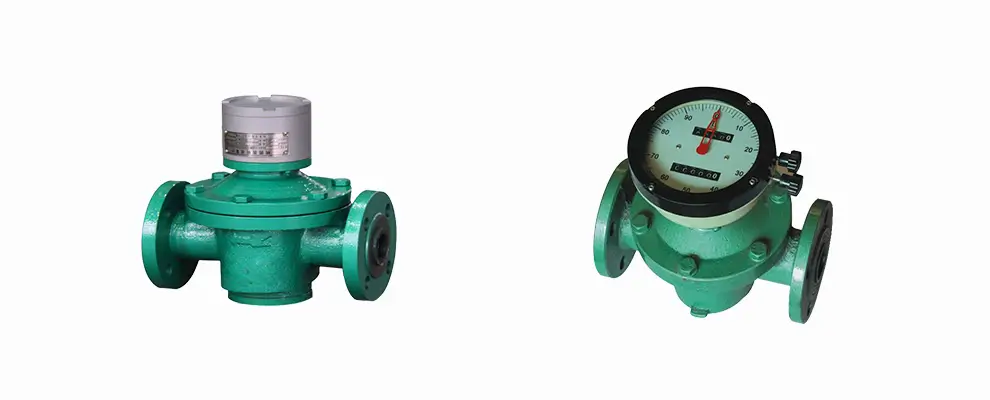
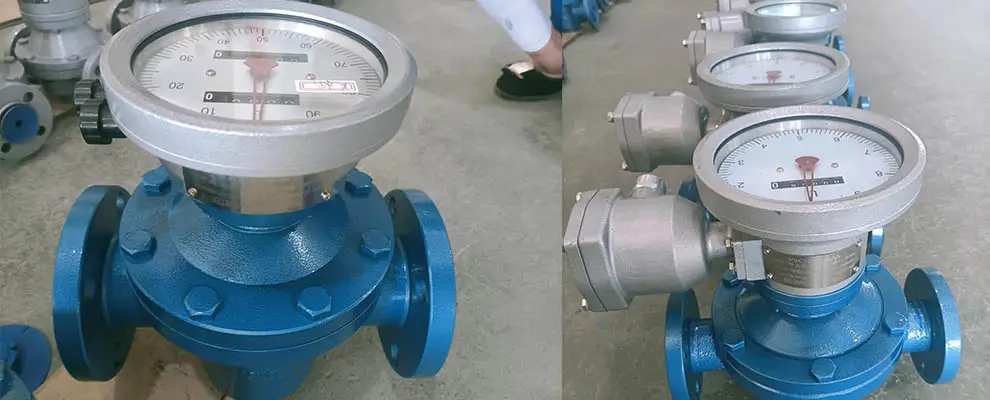
The oval gear flow meter (also referred to as a gear flow meter) is a classic positive displacement (PD) flow meter. Unlike velocity-based flow meters that calculate flow volume based on fluid flow speed, it adopts a direct volumetric measurement method. It quantifies liquid volume by mechanically capturing and discharging fixed amounts of fluid, delivering more intuitive and accurate metering results.
It has an all-mechanical simple structure and great environmental adaptability. This high-precision industrial meter outperforms turbine and magnetic flow meters. It does not need long straight pipes before or after installation. The device fits complicated pipeline working conditions on site. It fixes low precision issues of old meters for thick viscous fluids. It is ideal for precise metering of all clean fluids with medium to high viscosity.
2. Working Principle
The meter’s reliable measurement performance stems from its precise mechanical structure. It features two precision-meshed oval gears sealed inside a dedicated measurement chamber. The natural pressure difference between the meter’s inlet and outlet ports drives the two gears to rotate steadily and synchronously. With a custom conjugate curve profile, the gears form tight, stable sealed cavities at every meshing position, laying a solid foundation for accurate volumetric metering.
During operation, the cooperating oval gears and meter inner wall create four fixed-size, crescent-shaped metering cavities. Each full rotation of the gears pushes a fixed volume of liquid from the inlet to the outlet. Total flow volume is calculated by counting gear rotations, with a perfect linear correlation between rotation times and fluid volume. This sophisticated mechanical design ensures ultra-high measurement accuracy with almost no slip under standard operating conditions.
3. Key Advantages of Oval Gear Flow Meters
Compared with mainstream magnetic, turbine, and vortex flow meters, oval gear flow meters deliver more prominent technical and practical advantages for industrial fluid metering. Their excellent stability, strong adaptability, and low operational costs have made them a long-standing preferred choice for various precision measurement scenarios, with core benefits summarized as follows:
3.1 Ultra-High Measurement Accuracy & Repeatability
Direct volumetric measurement removes calculation errors caused by velocity conversion. Standard accuracy hits ±0.5% and can reach ±0.2% for high-grade models, with repeatability as high as 0.1%. This level of precision easily meets strict requirements for industrial batching, automated filling, and commercial trade metering.
3.2 Excellent Adaptability to Viscous Media
Viscosity adaptability is the biggest strength of oval gear flow meters. They provide stable, reliable readings for fluids ranging from thin liquids to extremely thick media (1–100000 mPa·s), including lubricants, heavy fuel oil, resin, syrup, and paint. Unlike turbine meters that lose accuracy when fluid viscosity changes, oval gear meters stay fully accurate with thicker liquids and achieve better sealing and stability in high-viscosity working conditions.
3.3 Low Pipeline Installation Requirements
Most conventional velocity-type flow meters rely on long upstream and downstream straight pipe sections to stabilize fluid flow fields, which increases pipeline modification costs and limits on-site installation flexibility. In contrast, oval gear flow meters haveno strict straight pipe section requirements. Their measurement accuracy remains unaffected by fluid turbulence, swirling flow, or uneven velocity distribution, allowing flexible installation in complex pipeline layouts such as elbows and tees with outstanding on-site adaptability.
3.4 Stable Operation & Low Maintenance Cost
Built with an all-mechanical core, this meter has no delicate electronic sensors touching the fluid. It resists electromagnetic and environmental interference and runs consistently for years. Under normal operation, gear wear is minimal for a long service lifespan. Routine cleaning of debris is the only regular maintenance needed, which keeps overall operating costs very low.
3.5 Wide Measurement Range
The meter supports an ultra-wide turndown ratio, maintaining consistent and accurate readings across the full flow range from ultra-low flow rates to full rated capacity. It perfectly adapts to fluctuating flow conditions in complex industrial processes and effectively resolves the low-flow inaccuracy issue that commonly troubles traditional flow meters.
4. Typical Industrial Application Scenarios
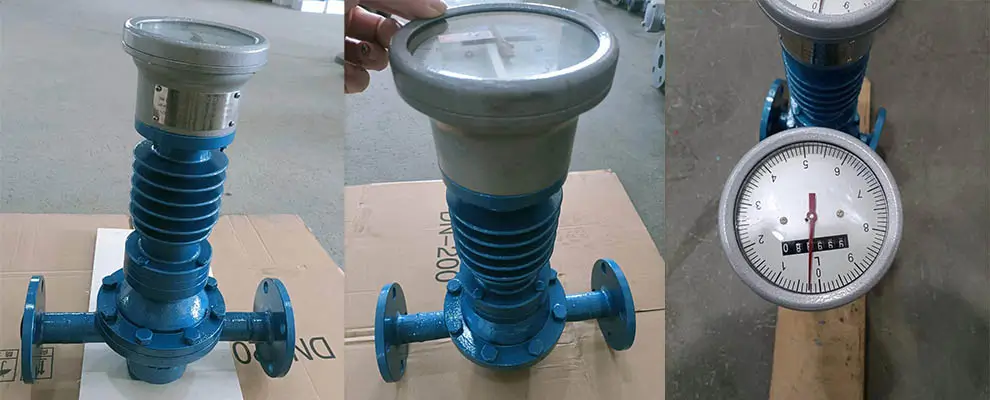
Built for high viscosity tolerance and precise volumetric metering, oval gear flow meters excel in precision industrial scenarios that demand strict flow control and accurate trade billing. They serve diverse industries with customized performance, covering mainstream production and processing fields as below:
4.1 Petroleum & Petrochemical Industry
The petroleum and petrochemical sector is the most mature application scenario for oval gear flow meters. These devices accurately measure crude oil, diesel, gasoline, lubricants, heavy oil, and petroleum resin. They are widely deployed for oil depot trade settlement, pipeline transmission metering, and refined oil quantitative dosing, enabling enterprises to realize fair energy transactions and refined cost accounting.
4.2 Fine Chemical Industry
In fine chemical production, precise raw material proportioning is critical to product quality. Oval gear flow meters provide high-precision batching and real-time flow monitoring for paint, coatings, adhesives, resin, chemical solvents, and other raw materials. Their accurate volumetric metering ensures consistent ingredient ratios, stabilizes finished product quality, and effectively reduces raw material waste and production losses.
4.3 Food & Beverage Industry
Sanitary-grade oval gear flow meters comply with strict food safety standards, making them ideal for food and beverage production. They precisely measure viscous food ingredients such as syrup, cooking oil, honey, and sauce, supporting automated quantitative filling and standardized process flow control. They effectively guarantee production precision and food safety for mass food processing.
4.4 Pharmaceutical & Daily Chemical Industry
Pharmaceutical and daily chemical manufacturing require strict batch consistency and fluid purity control. Oval gear flow meters accurately meter glycerin, medicinal syrups, cosmetic emulsions, detergents, and other special fluids. They deliver precise fluid dosing control throughout the production process, eliminating batch-to-batch deviations and ensuring consistent, high-quality finished products.
4.5 New Energy & Environmental Protection Industry
With the rapid development of emerging industries, oval gear flow meters also play a key role in new energy and environmental protection fields. They accurately measure new energy lubricants, battery electrolyte additives, and environmental treatment chemicals, meeting the high-precision metering demands of modern advanced industrial production processes.
5. Common Usage Misunderstandings & Troubleshooting
5.1 Common Misunderstandings
- Misunderstanding 1: Applicable to all fluids. In fact, oval gear flow meters only work for clean, particle-free liquids. They cannot handle gas, steam, or impurity-laden turbid liquids, as these contaminants cause gear abrasion and inaccurate readings.
- Misunderstanding 2: Accuracy is not affected by any working conditions. Long-term overloading, medium crystallization, and gear wear gradually degrade measurement accuracy.
- Misunderstanding 3: No maintenance required for long-term use. Long-term operation builds up dirt inside the measuring chamber, so regular cleaning and calibration are essential to sustain long-term measurement accuracy.
5.2 Common Faults & Solutions
- Large Measurement Error: Gear wear, dirt blockages, or overly viscous media cause this issue. Solution: Clean the measuring chamber, inspect the gears for abrasion, and recalibrate the meter.
- No Flow Signal Output: Gear jams or signal module malfunctions trigger this problem. Solution: Disassemble the meter and remove foreign debris, then inspect and replace faulty signal components.
- Abnormal Pipeline Pressure: Medium crystallization or pipeline blockages cause abnormal pressure. Solution: Heat the fluid to reduce viscosity and clear blockages, then clean the pipeline filter.
6. Industry Development Trend
Smart manufacturing and stricter metering standards push oval gear meters forward. These meters develop for intelligence, higher accuracy and better sanitation. They also keep advancing to cut power consumption in operation. Traditional standalone mechanical meters with single measurement functions are gradually being phased out and replaced by integrated intelligent models that support remote data transmission, real-time operational monitoring, automatic fault alerts, and online calibration.
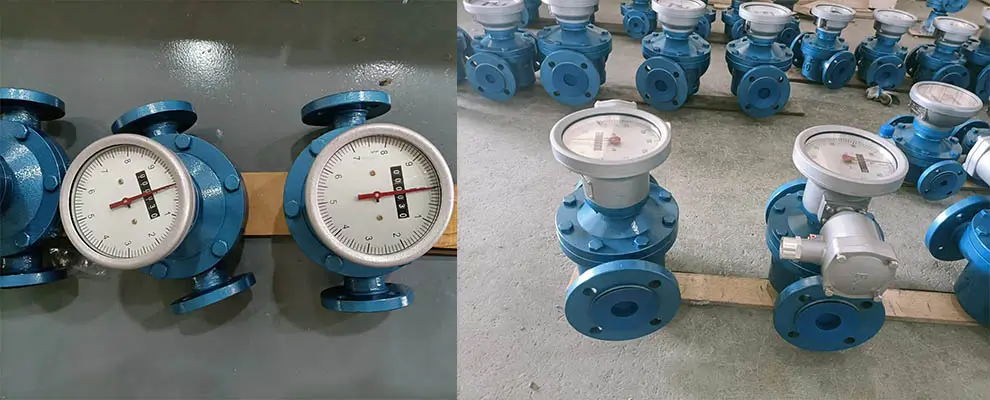
In line with industry market demands, manufacturers continue to optimize product structures: sanitary corrosion-resistant models are widely applied in food, pharmaceutical, and new energy industries, while compact low-power designs cater to portable testing and small-batch production scenarios. As a mature, reliable, and cost-effective volumetric metering solution, oval gear flow meters will remain indispensable for industrial liquid measurement in the long run.
7. Conclusion
Oval gear meters are premium volumetric tools for high-viscosity liquids. They fix performance flaws of old meters in tough complex working sites. They feature exclusive mechanical principles and steady running performance. The meters suit many scenarios and cost little to maintain long-term. They deliver accurate, stable flow readings for various industrial fluids. They are widely used in oil, chemical, food and pharmaceutical industries.
To maintain long-term accurate and stable operation in industrial settings, users only need to select suitable models according to actual working conditions, follow standard installation protocols, and perform basic routine maintenance. For manufacturing enterprises pursuing precise process control and fair commercial trade settlement, oval gear flow meters offer a highly cost-effective, dependable, and versatile flow measurement solution.