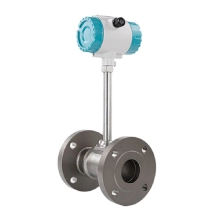
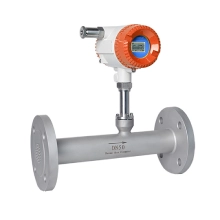
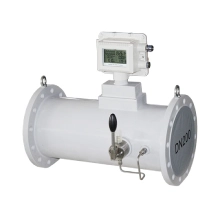

Steam plays an important role in many industrial processes. Factories use it for heating, drying, sterilization, power generation, and other production tasks. To manage steam consumption and improve energy efficiency, companies need reliable flow measurement.
A steam flow meter measures the flow rate of steam through a pipeline. It helps operators monitor steam consumption, control production processes, and identify energy waste.
However, measuring steam flow is not as simple as measuring water flow. Steam density changes with pressure and temperature. The type and condition of steam also affect measurement accuracy.
This article explains how steam flow meters work, their common types, industrial applications, and the key factors to consider when selecting one.
1. What Is a Steam Flow Meter?
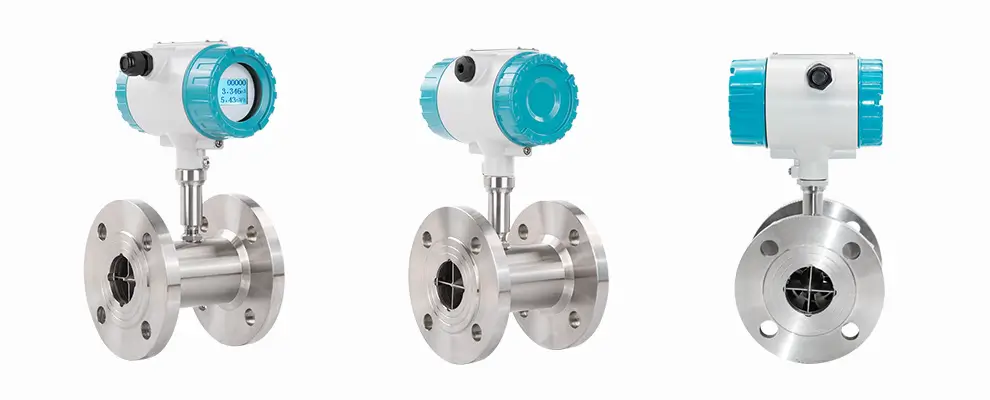
A steam flow meter is an industrial instrument that measures the flow of steam through a pipeline. Depending on its design, it can measure volumetric flow rate or calculate mass flow rate.
Common measurement units include:
- kg/h (kilograms per hour)
- t/h (metric tons per hour)
- m³/h (cubic meters per hour)
In many industrial applications, mass flow measurement is more useful than volumetric flow measurement. It shows how much steam passes through a pipeline over a specific period.
Steam flow meters help businesses:
- Monitor steam consumption in real time.
- Improve boiler operation and energy management.
- Measure steam supply to different production lines.
- Detect abnormal changes in steam consumption.
- Allocate steam costs between different departments or production units.
By monitoring steam flow, companies can better understand their energy usage and improve operational efficiency.
2. How Does a Steam Flow Meter Work?
Different steam flow meters use different measurement principles. However, most instruments detect changes in flow velocity or pressure and use this information to calculate the flow rate.
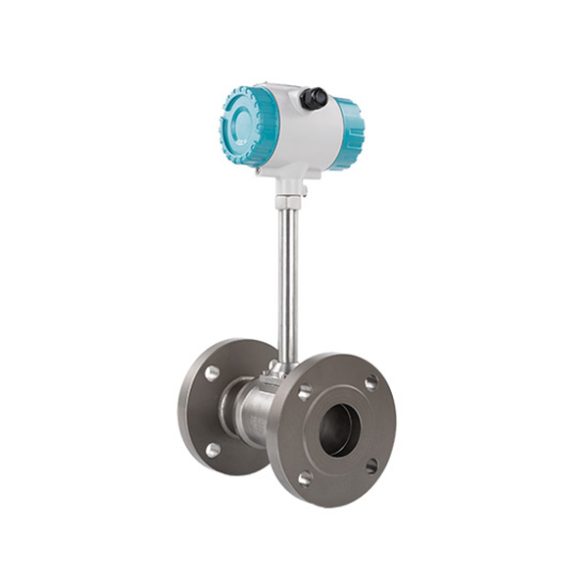
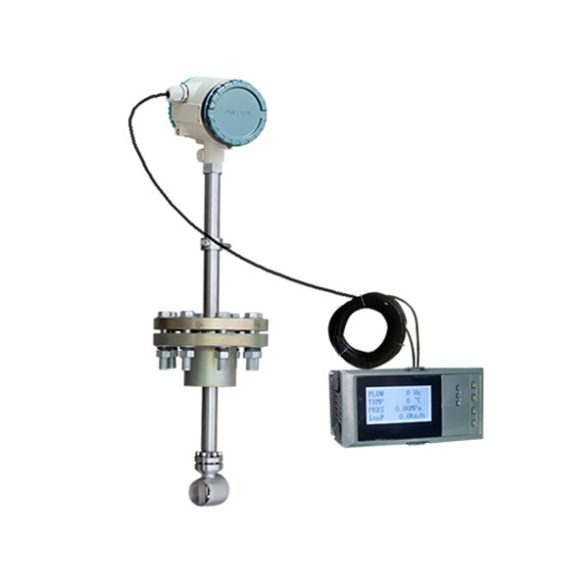
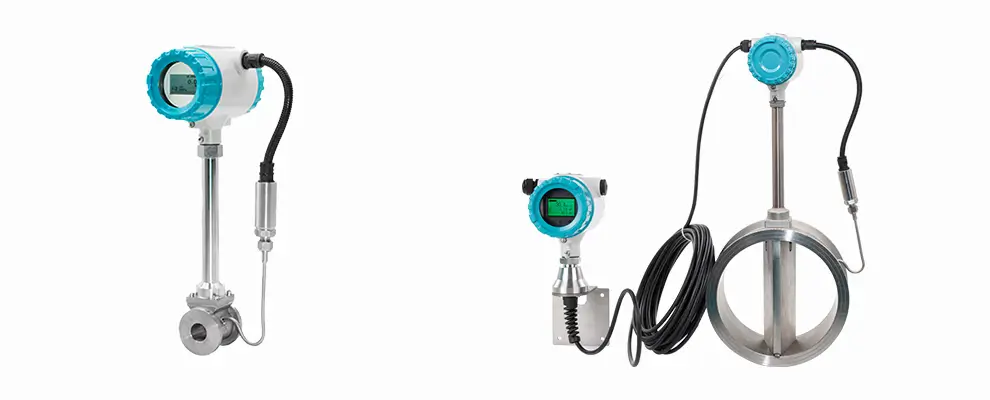
For example, a vortex steam flow meter uses a bluff body inside the pipeline. As steam flows past this body, it creates alternating vortices on both sides.
The frequency of these vortices is proportional to the steam velocity within the meter’s operating range. A sensor detects the vortices and sends a signal to the meter’s electronic unit.
The instrument then calculates the flow rate based on the detected signal.
For accurate steam mass flow measurement, the system may also require pressure and temperature compensation. These values help determine steam density under actual operating conditions.
For saturated steam, pressure or temperature can be used to determine density when the steam is in a known saturation state. For superheated steam, both pressure and temperature are normally required.
This compensation is important because changes in steam density affect the relationship between volumetric flow rate and mass flow rate.
3. Common Types of Steam Flow Meters
Different flow measurement technologies suit different steam conditions and industrial requirements. The most common options include vortex flow meters, differential pressure flow meters, and turbine flow meters.
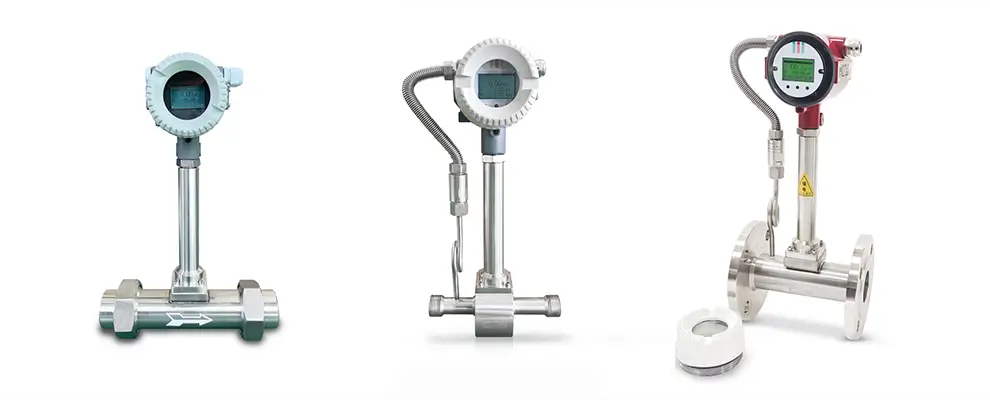
3.1 Vortex Flow Meter
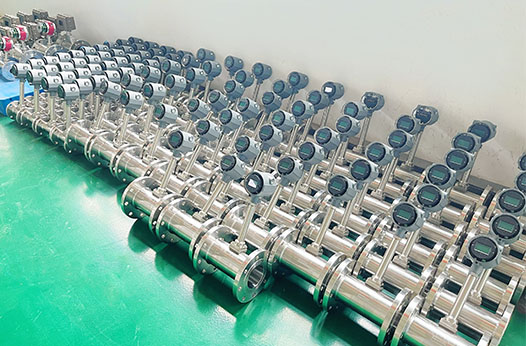
A vortex flow meter is one of the most common choices for industrial steam measurement.
It works by detecting vortices generated when steam passes a bluff body inside the flow meter.
Advantages:
- No moving parts, which reduces mechanical wear.
- Suitable for many saturated and superheated steam applications.
- Relatively low maintenance requirements.
- Can measure steam flow over a suitable operating range.
- Some models support integrated pressure and temperature compensation.
Applications:
Vortex flow meters are widely used in boiler systems, steam distribution pipelines, industrial heating systems, and energy management projects.
However, they require suitable straight pipe sections. External vibration and very low flow rates may also affect measurement performance.
3.2 Differential Pressure Flow Meter
A differential pressure (DP) flow meter measures steam flow by detecting the pressure difference across a primary element.
Common primary elements include orifice plates, Venturi tubes, and flow nozzles.
When steam passes through the primary element, its velocity and pressure change. A differential pressure transmitter measures the pressure difference and sends a signal to the flow calculation system.
Advantages:
- Mature and widely used measurement technology.
- Suitable for high-temperature and high-pressure applications when properly designed.
- Offers different primary element options.
- Supports mass flow calculation when combined with appropriate pressure and temperature compensation.
Applications:
DP flow meters are commonly used in power plants, boiler systems, and large industrial steam pipelines.
However, their measurement range and pressure loss depend on the primary element. Orifice plate systems also require careful installation and maintenance.
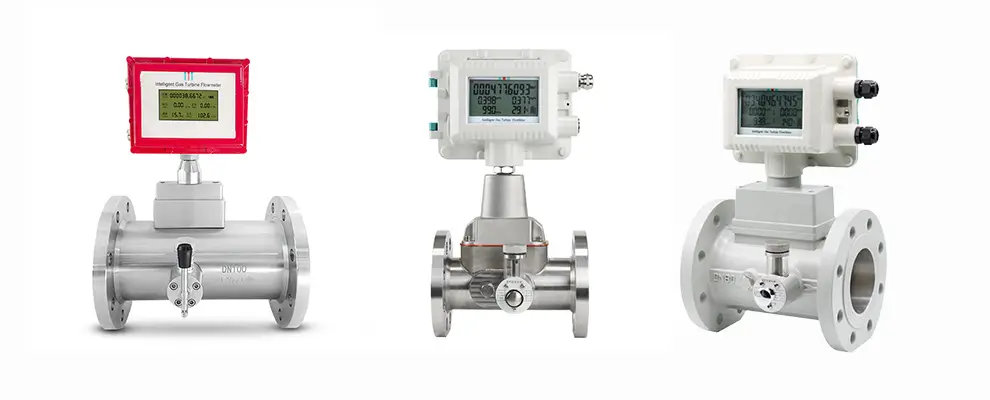
3.3 Turbine Flow Meter
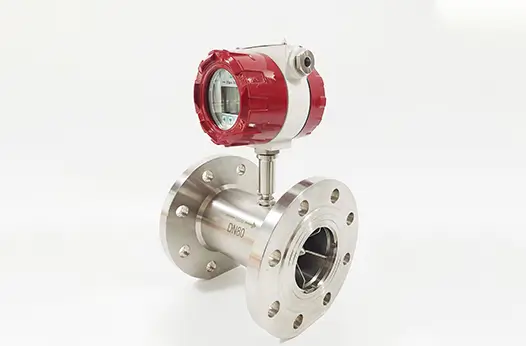
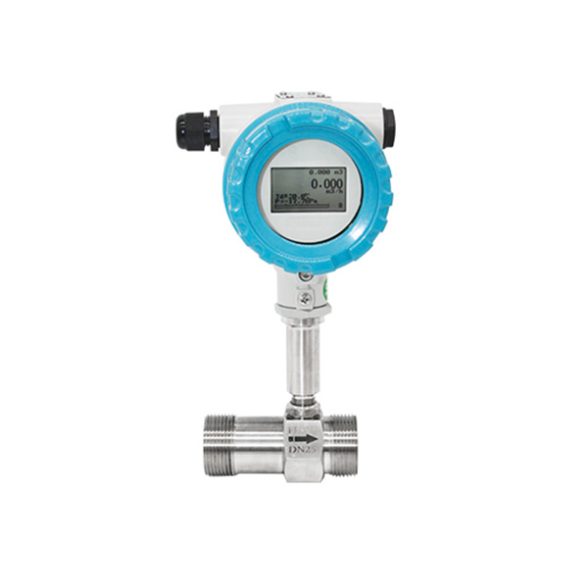
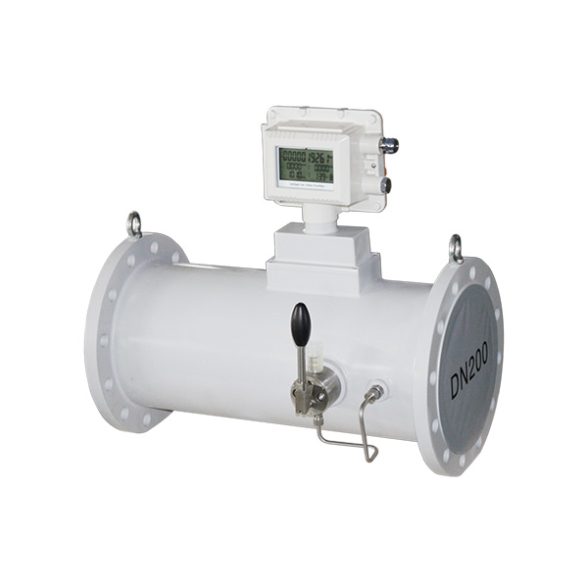
A turbine flow meter measures flow using a rotating turbine rotor inside the pipeline.
When steam passes through the meter, it drives the rotor. The rotor speed changes with the flow velocity. A sensor detects the rotational speed and converts it into a flow signal.
Advantages:
- Fast response to flow changes.
- Good repeatability under suitable operating conditions.
- Compact measurement structure.
- Suitable for certain clean and stable steam applications.
Applications:
Turbine flow meters can be used in selected industrial steam measurement systems when the operating conditions meet the meter’s requirements.
However, the rotating components can wear over time. Steam quality, condensate, operating temperature, and maintenance requirements must be carefully considered before selecting this type of meter.
4. Applications of Steam Flow Meters
Steam flow meters serve many industries. They help companies monitor steam supply and improve production efficiency.
4.1 Power Generation
Power plants use steam to drive turbines and generate electricity. Steam flow measurement helps operators monitor steam supply and evaluate system performance.
4.2 Food and Beverage Industry
Food processing plants use steam for cooking, sterilization, cleaning, and heating.
A steam flow meter helps monitor steam consumption in different production processes. This supports better energy management and process control.
4.3 Chemical Industry
Chemical plants often use steam for heating reactors, maintaining process temperatures, and other production operations.
Accurate steam measurement helps operators control steam distribution and monitor energy consumption.
4.4 Textile Industry
Textile factories use steam for dyeing, drying, ironing, and other processes.
Steam flow meters help measure the amount of steam supplied to different production areas.
4.5 Pharmaceutical Industry
Pharmaceutical manufacturers use steam for equipment sterilization, cleaning, and process heating.
Reliable steam measurement helps operators monitor steam supply and maintain stable operating conditions.
5. How to Choose the Right Steam Flow Meter?
Choosing the right steam flow meter requires more than checking the pipeline diameter. Buyers should consider actual operating conditions and measurement requirements.
Here are several important factors to consider.
5.1 Steam Type
First, identify the type of steam in the pipeline.
The two main types are:
- Saturated Steam: Steam exists at its saturation temperature for a given pressure.
- Superheated Steam: Steam has a temperature above its saturation temperature at the same pressure.
Different steam conditions may require different compensation methods and instrument configurations.
Also, check whether the pipeline contains wet steam. Water droplets and condensate can affect measurement performance.
5.2 Operating Pressure and Temperature
Steam systems often operate under high pressure and temperature.
Before purchasing a steam flow meter, confirm the normal and maximum operating pressure and temperature.
The meter’s pressure rating and temperature limits must meet the actual operating conditions.
5.3 Flow Rate Range
Check the minimum, normal, and maximum steam flow rates.
A meter that is too large may not provide stable readings at low flow rates. A meter that is too small may cause excessive pressure loss or exceed its measurement range.
Proper sizing helps maintain measurement accuracy across different operating conditions.
5.4 Pipeline Size and Installation Conditions
The pipeline diameter directly affects flow meter selection.
You should also consider the available straight pipe length, installation position, pipeline layout, and nearby equipment.
For example, vortex flow meters need suitable upstream and downstream straight pipe sections to maintain a stable flow profile.
Always follow the manufacturer’s installation requirements.
5.5 Measurement Requirements
Different projects have different measurement goals.
Some users only need to monitor steam flow rate. Others need accurate mass flow data for energy management, production cost calculation, or internal steam distribution.
If mass flow measurement is required, check whether the flow meter supports pressure and temperature compensation or can work with an external flow computer.
6. Why Is Accurate Steam Flow Measurement Important?
Steam is an important energy source in industrial production. Poor measurement can lead to unnecessary energy costs and inefficient steam distribution.
A reliable steam flow measurement system offers several benefits.
Better Energy Management
By monitoring steam consumption, companies can identify areas with high energy usage and improve their energy management plans.
Improved Process Control
Stable steam flow measurement helps operators maintain suitable process conditions in heating, drying, and sterilization applications.
Reduced Operating Costs
Accurate consumption data helps companies identify abnormal steam usage and reduce energy waste.
More Reliable Production Data
Continuous measurement provides useful operating data for production analysis, equipment management, and energy performance evaluation.
Conclusion
A steam flow meter is an important instrument for industrial energy management and process control. It helps companies monitor steam consumption, improve production efficiency, and reduce energy waste.
Vortex, differential pressure, and turbine flow meters each have their own advantages and limitations. The right choice depends on steam conditions, operating parameters, pipeline size, and measurement requirements.
Before purchasing a steam flow meter, make sure you understand your actual operating conditions. Proper selection will help ensure reliable measurement over the long term.